General News


This story like other posts has been hacked with meaningless symbols (such as “café” being turned into Café). We’re trying to erase these intrusions, but there are hundreds of them throughout this blog. — Dave Mitchell, 3/5/22


Anyone who takes a job on a small-town newspaper, especially in West Marin, has to love the profession. Weekly newspaper people work long hours for low pay, but reader demand for their publications is reassuringly high, so high, in fact, that while daily newspapers in the United States are losing circulation, weeklies are gaining. Here’s a look at people from West Marin’s press, as well as an internationally acclaimed editor’s observations about this country’s weekly newspapers.

Tuesday evening, six of us past and present Point Reyes Light staff, along with a couple of other newsmen, got together at Mike and Sally Gale’s beef ranch in Chileno Valley to welcome back their son Ivan Gale. Ivan, a former Light reporter, now writes for The National, an English-language daily in Abu Dhabi.

For an account of his adventures in the Arab world, please see posting Number 121. Ivan is in town for a few days because sister Kate is getting married Saturday.

100_0524.jpg

Point Reyes Light staff and alumni (clockwise from bottom): Ivan Gale, a former Light reporter and now a business writer for The National in the United Arab Emirates; Jacoba Charles, a current Light reporter; Molly Birnbaum, a current Light reporter; Dave Mitchell, the previous editor and publisher of The Light; Andrea Blum, a former Light reporter and now a reporter for The West Marin Citizen; and Janine Warner, a former Light reporter and now a new-media consultant and author. (Photo by Josh Haner, a New York Times photographer)

Ivan, Andrea, Jacoba, and Molly all hold masters’ degrees from Columbia University’s Graduate School of Journalism.
100_0558.jpg

A combined half century of newspaper experience: Missy Patterson, who has run the front office of The Point Reyes Light for 27 years, flanked by former Light reporter Janine Warner of Los Angeles and her husband Dave LaFontaine at Café Reyes Wednesday. Dave and Janine have been visiting in Point Reyes Station for the past week.

Janine, who worked at The Light from 1990 to 92, left to publish (with Light columnist Victor Reyes) Vision Latina, a 20,000-circulation bilingual monthly for Marin and Sonoma counties. When it ceased publication after three years, Janine started her own web-design business and went on to become the online editor of The Miami Herald and teach at the University of Miami and at USC. She has written more than a dozen Internet books, such as Websites ”Do It Yourself” for Dummies, which together have sold half a million copies. She is a regular contributor to Layers Magazine, a conference speaker, and an online-media consultant with Dave.

Dave likewise has wide experience as a reporter and editor, from The Eau Claire (Wisconsin) Leader-Telegram and The Arizona Republic to The Caracas (Venezuela) Daily Journal and Star magazine. In addition, he edited Single Parent magazine, as well as FilmsOn.com, and is a contributor to the Newspaper Association of America’s Growing Audiences publication. His blog is called Hard News, Inc., although he says a new and improved blog called “Sips from the Firehose” is being designed and prepared to launch.

Dave and Janine, who call their business Artesian Media, have spent months overseas (usually together) during the past year, consulting and giving talks in Argentina, Chile, Colombia, Mexico, Russia, Spain, and Ukraine, in addition to working in various US cities.

misc0001_15_2.jpg

Linda Petersen of Inverness, ad manager of The West Marin Citizen, and her dog Sebastian shared Café Reyes’ garden two weeks ago with an unidentified couple. (Photo by Jasper Sanidad, photographic contributor to The Light)

100_0458.jpgHaving changed its fare in the past year, Café Reyes in Point Reyes Station on some days now resembles a newspaper hangout.

Offering beer and wine, plus pizza from a wood-fired oven, the café with its sunny garden and jovial staff provides a respite from the harried world of newspapering.

Seen here in the garden of Café Reyes two weeks ago, Light photo contributor Jasper Sanidad protests that he’d rather be on the other side of the camera.

During the 27 years I published The Light, I belonged to a number of journalism associations, each valuable in its own way. Although I’m now retired, I still belong to one of the organizations: the International Society of Weekly Newspaper Editors (ISWNE).

As you might expect, the majority of the editors are in the United States, but there’s also a number in Canada and England. Five years ago, our president was an editor in Ireland.

Like other newspaper organizations, ISWNE conducts annual contests to recognize excellence in journalism, and this year’s winner of the society’s Golden Quill award for editorial writing was Melissa Hale-Spencer, editor of The Altamont Enterprise in New York. In her acceptance speech, Hale-Spencer made some points worth repeating concerning weekly newspapers:

“We are all painfully aware that circulation for daily newspapers is falling. We wince each time we learn of another round of layoffs, another foreign bureau shut down, another paper closed…. While dailies are struggling, not everyone is aware that circulation for weekly newspapers in the United States is growing. A survey last year by the National Newspaper Association found that 83 percent of adults read a community newspaper each week, up from 81 percent in 2005.

100_0474.jpg“According to a 2007 survey, local community papers are the primary source of information by a two-to-one margin over the next most popular medium,” television….

“I believe weekly newspapers are growing in readership because they offer news that can’t be found elsewhere.”

Another member of the West Marin press takes in sun (and pizza) a week ago in the café garden.

Linda Sturdivant of Inverness Park is a driver for The Citizen, delivering bundles of newspapers to merchants and newsracks.

Tomales again this weekend showed it’s a town that knows how to party. The 2000 census listed Tomales’ population as 371 (the third smallest of the 14 towns in West Marin, ahead of only Dillon Beach, 319, and Olema, 245). However, the few folks who live in Tomales are known for hosting notable bashes from a 200-biker Hells Angels’ barbecue in 2004 to its yearly Founders’ Day.

100_0493_1.jpgAlthough a wine-tasting booth in the town park was doing a brisk business Sunday and the beer booth sold out its entire inventory, the William Tell bar was crowded inside and out. In front of the bar, a band played, and some folks danced.

Tomales on Sunday resumed its annual Founders’ Day celebration, which includes a parade up Highway 1 through downtown followed by a picnic in the park, complete with food, beer, and wine booths. Last year the celebration couldn’t be held because the town park was in the midst of an improvement project.

The project isn’t finished yet, but already new restrooms and new playground equipment are in place. The park is bordered with a new, but rustic, fence. Using split railroad ties, volunteer Bill Jensen built a fence like those traditionally found on local sheep ranches. Stabilized with handsome retaining walls made of stone, terraces, where families now picnic and children play, have been dug into the hillside. And therein lies a story.

Because many of Tomales’ ranching families have lived there for generations and care about its history, the town maintains an ambitious Tomales Regional History Center. Syndicated cartoonist Kathryn LeMieux, who lives in Tomales, is a volunteer at the museum, as well as a former member of its board, and one day during July 2007, she received a call from contractor David Judd, who’s in charge of the park renovation.

Kathryn ought to come down to the park, he said, and “look at all the old things we’re digging up.” David said he’d have the bulldozer work elsewhere for a while to give her a chance to sift through dirt that had been moved, and Kathryn immediately became fascinated with what she found. In the top four feet of soil were old bottles, Miwok arrowheads, and broken China. A year later, Kathryn is still inspecting dirt in the park and, in fact, found obsidian from an arrowhead on Sunday.

100_0501.jpg

Townspeople were captivated by the trove of archeology Kathryn (seen above with Bill Bonini) revealed in the town park on Sunday, and it was one of the highlights of Founders’ Day.

100_0500.jpg

Along with dozens of arrowheads and pieces of China, Kathryn has collected numerous bottles from the beginning of the last century. She even found an automobile-dealership license plate from 1919, a year before the dealer’s home apparently was destroyed in a town fire. (Back then Tomales was considered sufficiently populous to warrant its own dealership.)

100_0466.jpg

Just south of Tomales, Highway 1 runs alongside Walker Creek, and it happened that last Thursday when I drove this stretch of road, I came up behind a car that was barely moving. Looking around to see why it had slowed, I spotted two deer wading across Walker Creek. So I pulled onto the shoulder and watched. Eventually, the water got too deep for the deer, and they had to swim the last 50 feet or so, coming ashore no more than 25 yards upstream from me.

Once the site of a Miwok village called Utumia, present-day Tomales was founded by Warren Dutton, who began building settlements in the area during the 1850s. The town gained prominence in 1875 when it became a stop on the new narrow-gauge railroad, which ran from Sausalito across Marin County to Point Reyes Station and then north to Cazadero.

Before long the town was home to 11 saloons, which may have been where ebullient residents hatched an unsuccessful campaign to have Tomales named the countyseat despite its remote location

Tomales, however, is a town that has had to keep rebuilding itself, for it has been struck by one disaster after another. Town fires in 1877, 1891, and 1898 each destroyed numerous buildings, as did the 1906 earthquake and yet another town fire in 1920. In 1930, the last train pulled out of town, just as Prohibition and the Great Depression were also dealing Tomales economic blows.

Tomales’ population today is about 40 percent below its peak a century ago, and its largest employer is merely good old Tomales High. Nonetheless, townspeople have persevered, and the Founders’ Day crowd sounded almost giddy as they admired the work being done (much of it by volunteers) at their park — and the antiquities being unearthed.

Last in a series. The Inspector General’s report on its investigation into the Point Reyes National Seashore administration’s treatment of Drakes Bay Oyster Company includes numerous summaries of what various witnesses told investigators. By quoting the actual comments of witnesses and investigators, this series has attempted to show that far more has come to light about National Seashore wrongdoing than one might infer from what’s mentioned in the report’s conclusion.

It was one of the more bizarre moments in Point Reyes National Seashore Supt. Don Neubacher’s assault on Drakes Bay Oyster Company. Although it occurred just before the Inspector General of the Interior Department issued its report on that conflict, the incident highlighted the alliance arrayed against the Lunny family’s business at Drakes Estero.

As reported in the May 7 Marin Independent Journal, “The point man for the local Sierra Club chapter issued a threat to Marin supervisors. He and possibly his politically powerful club will fight a proposed county parks and open space tax if supervisors don’t support the Point Reyes National Seashore’s restoration efforts.

sierrabanner-marin-band2.jpgThose efforts include a back-to-nature push by park Supt. Don Neubacher to shut down an oyster farm in Drakes Estero. Gordon Bennett, who regularly represents the Sierra Club at county meetings, warned supervisors on [May 6] that unless they tell US Sen. Dianne Feinstein that they don’t oppose Neubacher’s efforts, he would urge the club to actively oppose the county’s tax plan.

“The county is considering an open space tax for the November ballot that would need a two-thirds majority vote to pass, and the Sierra Club’s opposition could doom its chances.” The tax would raise $10 million per year for “improving and maintaining parks, acquiring open space, preserving farmland and paying for wildland fire protection.” Supervisor Steve Kinsey said Bennett’s “blackmail” was “myopic.”

Although the Marin Sierra Club Group plays political hardball, Bennett’s attempt to blackmail county supervisors on Neubacher’s behalf was over the top, and the group quickly announced it wouldn’t necessarily follow his advice. All the same, county supervisors did not put the tax measure on the ballot.

100_0385.jpgBennett’s threat could have been anticipated. National Seashore Supt. Neubacher admitted to federal investigators that in April 2007 he had told Kinsey that environmental groups might “go to wa,” to ensure that Drakes Estero becomes wilderness in 2012, the Inspector General’s report says.

Although the oyster company is half a mile up a dirt road from Sir Francis Drake Boulevard, Neubacher ordered that the turnoff sign, which for years had said when the business was open, be changed to eliminate the hours.

The report indeed makes clear how much the park superintendent has counted on the environmental community, along with his staff, to wage a propaganda war against the oyster company on his behalf.

Some highlights from the propaganda war:

In May 2007, county supervisors held a hearing on county support for the oyster company. Neubacher and his senior science advisor Sarah Allen showed up go argue against the idea. In making his case, the Inspector General’s Office wryly commented, Neubacher “could have used better judgment.”

Supt. Neubacher, investigators noted, “exaggerated the Marin Mammal Commission’s role in responding to Drakes Bay Oyster Company’s impact on the harbor seal population in Drakes Estero when he spoke before the Marin County Board of Supervisors.”

100_943_1_43.jpgNeubacher (right) told supervisors the oyster company was disturbing harbor seals and that the Marine Mammal Commission had begun an investigation.

What actually happened, investigators discovered, was that Allen wrote Timothy Ragen, executive director of the commission, saying the company’s oyster bags were disturbing seals, and she asked him if the “commission would consider writing a letter raising concerns about the farm’s impacts on the seals.”

The Inspector General reported, “Our investigation determined that Ragen faxed a letter to Neubache” the day of the hearing based on Neubacher’s and Allen’s request. The letter states the following in part, “Unfortunately, I have just learned of this issue and have not had time to bring this matter to the attention of our commissioners.”

home_topbar1.jpgNonetheless, as investigators noted, at the supervisors’ hearing, Neubacher portrayed the Marine Mammal Commission’s interest in the issue by stating, “I mean it’s that complex, because now you’re talking about the Marine Mammal Commission, which wrote us a letter this morning. They’re going to take it up on a national level.”


Neubacher’s statement, the commission’s executive director Ragen commented to investigators, was “a shade of not quite accurate.”

Investigators then asked the park superintendent about the untruth, and “Neubacher conceded that it might have been a little bit misleading for him to say that the Marine Mammal Commission was taking up the issue and had written the National Park Service a letter.”

Equally misleading, park advisor Allen told the supervisors, “This year, chronic disturbance and the placement of bags on nursery areas has caused an 80 percent reduction of the seals.”

Federal investigators, however, reported that “an official transcript of the hearing revealed that [while] Allen did initially specify that seals had abandoned one area of the estero, [she] did not clarify in her next sentence that the 80 percent reduction to which she referred only applied to that particular site in the estero.”

100_0417_11.jpgWell before the supervisors’ hearing, the park’s propaganda war against the oyster company was underway, with several prominent West Marin environmentalists unwittingly lending their credibility to the park’s misrepresentations of science.

As previously noted, the Inspector General reported, “Our investigation determined that in her [Sheltered Wilderness] Report and in a [Point Reyes Light] article, Point Reyes National Seashore senior science advisor Sarah Allen had misrepresented research regarding sedimentation in Drakes Estero completed in the 1980s by USGS scientist Roberto Anima.”

She claimed Anima had found “oyster psuedofeces [to be] the primary source or a primary source for sediment” in the estero, but Anima told investigators his report “never said that oyster feces were affecting the sedimentation in Drakes Estero.”

Nonetheless, as was noted here last week, investigators reported, “Both the article titled Coastal Wilderness: The Naturalist, which Allen co-authored in The Point Reyes Light in April 2007 and an editorial piece titled Save Drakes Estero published in The Coastal Post as a “collaborative effort” by conservation groups in May 2007 refer to oyster feces as the primary cause of sedimentation in the estero.

The Inspector General reported that “the other authors of [The Light] column, John Kelly, the director of Conservation Science and Habitat Protection at [PRBO’s] Cypress Grove Research Center [in Marshall], and Jules Evens a self-described ‘naturalist and biologist’ [in Point Reyes Station], told investigators that Allen was the primary author of the column.” Allen agreed.

Dr. Corey Goodman of Marshall, a member of the National Academy of Sciences, was the first member of the general public to suspect the National Seashore administration was misrepresenting research. Investigators reported that Dr. Goodman had tried unsuccessfully to get the park to provide copies the “over 25 years of seal data from Drakes Estero,” Allen had told county supervisors the Park Service possessed.

100_04181.jpgIn the course of filing a series of Freedom of Information Act request on harbor seal data, investigators noted, Dr. Goodman claimed “there was a ‘double standard'” in the way the National Park Service supplied information to members of the public.

Specifically, Goodman referenced an article that Gordon Bennett of the Sierra Club had published in the July-August issue of the Sierra Club Yodeler.

“While I was denied access to 2007 harbor seal data based on deliberative [legal] process privilege, Bennett “appears to have free access to this data.” Investigators asked Bennett about this, and “he said there were times he would simply ask for materials from either Neubacher or Allen and he would receive the information.

“He said he also obtained specific numbers pertaining to seals for that [Yodeler] article without filing a Freedom of Information Act request.” An investigator wrote, “We confirmed that Bennett was able to obtain some information from the Point Reyes National Seashore with only an informal, verbal request.”

doi_banner_02_1.jpgAlthough an agent of the Interior Department’s Inspector General said that Bennett and Dr. Goodman had asked for different seal data, Dr. Goodman’s repeated requests for data on seals finally forced the Park Service to admit it had none prior to 1996. Allen herself would later admit to investigators that her statement to county supervisors that the Park Service possessed 25 years of data on seals in the estero was untrue.

In an effort to explain why Goodman was initially denied the 2007 harbor seal data, an investigator wrote somewhat sarcastically, the director of the Pacific West Region of the Park Service, Jon Jarvis, said, “We don’t require Freedom of Information Act requests generally to get this kind of information, because it’s publicly accessible information.”

100_7740_1_1_1.jpgHow did some environmental groups come to be primed for an attack on the oyster company? To some degree, it would appear, this happened during one or more meetings at the park. One gathering was in January 2005, Lunny (right) told investigators. He said it included “Neubacher and local environmentalists Ken Fox, president of the Tomales Bay Association; Jerry Meral, member of the Environmental Action Committee of West Marin; and Gordon Bennett, vice chair of the Sierra Club’s Marin Group,” the Inspector General reported.

Fox told investigators he remembered such a meeting in the Red Barn at park headquarters but couldn’t recall whether Neubacher was there. “Bennett recalled attending at least one meeting at the Point Reyes National Seashore with Neubacher, Fox, and Meral,” the investigators added.

100_0405_1.jpgThe inspectors did not report what was said at these meetings. They note only that Fox, like Bennett, said their discussions did not include “financially ruining the Lunnys or about trying to shut Drakes Bay Oyster Company down prior to 2012.”

Be that as it may, Bennett and other environmentalists would later take part in spreading negative publicity (much of it misrepresentations provided by the park) regarding the company.

A company barge brings freshly harvested oysters ashore.

When Marin Agricultural Land Trust held a tour of the company on Oct. 28, 2006, for example, Bennett showed up with copies of Allen’s since-discredited Sheltered Wilderness Report and handed them out to counter positive comments about the business.

Neubacher said he did not ask Bennett to disseminate the report, investigators noted. However, the park superintendent did say he had “a stack of copies in his office” [and] he was sure Bennett got a copy of the report because he (Bennett) was very active in local politics. Active on Supt. Neubacher’s behalf, it might be added.

Investigators from the Inspector General’s Office of the Interior Department, as was detailed here last week, found far more deception by the Point Reyes National Seashore superintendent and the park’s senior science advisor than has been reported in West Marin’s newspapers. Likewise getting almost no attention in the press is the chagrin investigators found among government scientists elsewhere in the West over the park’s misrepresenting research involving Drakes Bay Oyster Company.

home_topbar.jpgThe federal investigation was launched in April 2007, the Inspector General wrote, shortly after oyster company owners Kevin and Nancy Lunny wrote to us requesting an investigation into the actions of Point Reyes National Seashore Supt. Donald Neubacher. Specifically, the Lunny family alleged that Neubacher had undermined and interfered with the family’s business and had slandered the family’s name.

During his initial interview, investigators noted, “Kevin Lunny added that opponents of his shellfish operation were using faulty science to vilify him in the media as someone without regard for the environment.”

Here’s what Inspector General’s Report says about: (1) some of the park’s equivocations and misrepresentations; and (2), a variety of government scientists’ unhappiness with them:

“Our investigation determined that the Point Reyes National Seashore published a report on Drakes Estero,” where the Lunny family farms oysters, containing several inaccuracies regarding the source of sedimentation in the estero.

After receiving complaints from Corey Goodman [of Marshall], a neurobiologist, the National Park Service removed the report from its website on July 23, 2007, and two days later, it posted an “acknowledgment of errors” in its place.

100_0417_1.jpg“Our investigation determined that in this report and in a newspaper article, Point Reyes National Seashore senior science advisor Sarah Allen had misrepresented research regarding sedimentation in Drakes Estero completed in the 1980s by US Geological Survey scientist Roberto Anima.

“In addition, we determined that she failed to provide a germane email message between Anima and herself in response to a Freedom of Information Act request [by Dr. Goodman] that specifically sought such correspondence.

“And [she] stated in a public forum [a May 2007 Marin County Board of Supervisors meeting] that the National Park Service had over 25 years of seal data from Drakes Estero when, in fact, that was inaccurate.”

As Jon Jarvis, director of the Pacific West Region, later said, the National Park Service has no data before 1996. Confronted with her untruth, Allen told investigators that while she was still a student 25 years ago, she had written a thesis on the estero, but admitted she possesses no data from her research.

“While Allen denied any intentional misrepresentation of Anima’s work, our investigation reveals that Allen was privy to information contrary to her characterization of Anima’s findings in the Sheltered Wilderness Report [which she wrote] and other public releases, and she did nothing to correct the information before its release to the public.”

100_0387.jpgAnd where did this “information contrary to her characterization of Anima’s findings” come from? Both a fisheries biologist with the National Park Service and an environmental scientist with the California Department of Health Care Services.

An oyster-company worker rinses off freshly harvested oysters on Wednesday.

In September 2006, investigators noted, the park wrote to the state Health Department, complaining that a “sanitary survey” of Drakes Estero by one of the department’s environmental scientists was “incomplete,” because it failed to say oyster feces caused major sedimentation.

“The letter,” investigators noted, “referenced Anima’s work and contained the following sentence, which Allen wrote: “Anima (1991) stated that the presence of the oysters and their feces were the primary source of sedimentation.”

dhcs.jpgThe Department of Health Services environmental scientist said he told Allen in a telephone conversation in approximately October 2006 that Anima had not tested any correlation between sediment and oyster feces in Drakes Estero.

Nonetheless, the Sheltered Wilderness Report (which contained Allen’s discredited reference to Anima’s research, “was uploaded to the Point Reyes National Seashore website” three months later, investigators noted.

Why was the state Health Department’s information ignored? “Allen said she ‘vaguely’ remembered the Department of Health Services environmental scientist’s comment and that she was surprised by it,” investigators reported. She said she had “flagged a couple of pages (of Anima’s report )…. ‘But I just don’t remember more than that.'”

Allen used a UC Davis assessment of the estero, written by Professor Deborah Elliott-Fisk and herself, as the basis for a number of her allegations against the oyster company, but the professor was unhappy with how the assessment was cited.

100_03981.jpgAllen, for example, had cited the assessment in blaming oyster growing for invasive species showing up in Drakes Estero. Dr. Elliott-Fisk, however, told investigators that although any introduction of an invasive species to the estero was “bad,” researchers could not definitely attribute the invasive species to the mariculture operation.

Park visitors enjoy an oyster picnic near the company shop.

“In another example of omission,” investigators wrote, “Allen did not include the following statement regarding the impact of oysters on sedimentation, drawn from the Drakes Estero Assessment, in either version of the Sheltered Wilderness Report:

“Although pseudofeces from the suspended oysters may contribute to the amount of organic matter below the racks, adding to the system, the amount of organic matter resulting from eelgrass decomposition is likely far greater considering how expansive and dense the beds are within the estuary, making any significant organic inputs from the oysters undetectable in this study.”

“Likewise… not addressed in the Sheltered Wilderness report,” investigators wrote, was a statement in the assessment that “a significant difference in the percent of organic matter in areas below and adjacent to the oyster racks was not detected.”

100_0418.jpgGoing even further in his criticism was John Wullschleger, a fishery biologist with the National Park Service in Fort Collins, Colorado. The fisheries biologist had provided “technical oversight” for the UC Davis’ assessment of Drakes Estero, and he didn’t consider the assessment thorough enough on some matters to be cited as authoritative on key claims in Allen’s Sheltered Wilderness Report.

Investigators reported, “Wullschleger told the Office of Inspector General he was concerned about the Drakes Estero Assessment report because it was “basically trying to make statements from things that weren’t statistically significant and say, ‘Well, they’re different. So therefore there must be an impact on the estuary.'”

He opined that the Point Reyes National Seashore was “aiming to find out a little too much in a relatively short period of time with a small amount of money” [by working mostly from] the Drakes Assessment report by Elliott-Fisk.

Biologist Wullschleger wrote Allen, “Given that [the assessment’s] sample sizes were small and that most results were not statistically significant, I was surprised that the conclusions section began with the relatively strong statement, ‘Oysters mariculture has had an impact on the marine fish and invertebrates of Drakes Estero.'”

100_943_1_42.jpgNational Seashore Supt. Neubacher (right) repeatedly comes off in the Inspector General’s report as deceitful, even in petty matters. For example, The Point Reyes Light on May 18, 2006, published an article that cited a UC Davis assessment of Drakes Bay in concluding that oyster farming was not harming Drakes Estero, prompting Allen to write the Sheltered Wilderness Report as a rebuttal.

Once again careless with the truth, Supt. Neubacher told investigators that in writing the report, “the Point Reyes National Seashore was not attempting to counter The Point Reyes Light article but to get ‘objective information’ to the public.” Investigators, however, turned up correspondence between the Point Reyes National Seashore ecologist and Allen, as well as between Allen and UC Davis, showing that the Sheltered Wilderness Report was indeed written “to counter the conclusions drawn in the article.”

Despite the loud complaints from the National Seashore administration, The Light drew a reasonable conclusion in its article on the Drakes Estero Assessment, the Park Service biologist told Allen.

100_7740_1_1.jpgThe article, which also quoted Kevin Lunny (left), said the assessment showed that oyster growing “has no statistically significant effects on the estuary’s water quality, fish, and eelgrass.”

On Feb. 6. 2007, biologist Wullschleger wrote Allen: “I can see how the oyster grower could point to this Drakes Estero Assessment report as evidence that their operation is not having an impact on the aquatic communities of the estero. After all, only one of the differences associated with the oyster racks was statistically significant.”

Despite this warning, investigators added, “three days later, on February 9, 2007, the Sheltered Wilderness report, which drew on the Drakes Estero Assessment report, was uploaded to the Point Reyes National Seashore’s website for the first time.” (You’ll recall that three months earlier the state Health Department had also informed Allen of allegations in the report that misrepresented research.)

doi_banner_02.jpgEven within the regional office of the Park Service, the National Seashore administration’s politicizing research bothered staff. Investigators reported, “A scientist for the Pacific West Region of the National Park Service opined that in the Sheltered Wilderness report, Allen and ‘probably her colleagues’ had drawn conclusions that simply cannot be sustained,” particularly since there was something a little bit sketchy about the [underlying Drakes Estero Assessment], “which ‘itself is overreaching.'”

Anima of the USGS was even more upset. Contrary to how Allen had described his research, the scientist told investigators, his report never said that oyster feces was affecting the sedimentation in Drakes Estero but rather reflected that studies done elsewhere indicated that oyster waste was a factor in sedimentation in those bodies of water.

When interviewed, Anima agreed that as written in the Sheltered Wilderness Report, Allen’s use of the estimate of how much waste oysters could produce in a year seemed attributable to Drakes Estero even though he attributed that estimate to a study done in Japan [in 1955]….

Agent’s note: Both the article titled Coastal Wilderness: The Naturalist, which Allen co-authored in The Point Reyes Light in April 2007, and an editorial piece titled Save Drakes Estero published in The Coastal Post as a “collaborative effort” by various conservation groups in May 2007 refer to oyster feces as the primary cause of sediments in the estero.

header_graphic_usgsidentifier_white-1.jpgAfter reading those articles, Anima told Allen that his report did not state that he had “collected sediment cores from the estero,” as she had claimed, investigators said. Nor had he “identified pseudo feces of oysters as the primary source for sediment fill.”

He said he was “ticked off” that she had misrepresented his findings that way.

 Investigators noted, “Anima also contended that a partial quote Allen used in her report about oyster racks acting as a ‘baffle to tidal currents,’ was problematic because his report stated that the arrangement of oyster racks appeared to be serving as a baffle.

The investigators went on to comment, “Allen presented Anima’s quote about the racks acting as a baffle to tidal currents in a decisive manner, but Anima’s full quote on the subject is speculative.”

100_0409.jpgFurther, Anima’s statements that the effects of oyster mariculture on sediment in Drakes Estero required further study were omitted from both versions of the Sheltered Wilderness reports that were released to the public.”

Oyster workers use a boat to tow a barge of harvested oysters to the company dock.

Investigators wrote that “Anima said he let Allen know that he was ‘not happy’ with her portrayal of his research.”

According to him, she did not offer a “good justification” for inaccurately referencing his work, an investigator added. The USGS scientist “recalled that she tried to justify her actions by telling him about an agreement the National Park Service had with the oyster company.

“She explained that the current owner of the oyster farm wanted to extend his lease with the National Park Service when it expired and that the Point Reyes National Seashore was trying not to allow the extension of that lease.”

To be continued…

An exhibition titled Silver & Oil: Landscape Photographs and Paintings opened Saturday at the Claudia Chapline Gallery in Stinson Beach, drawing an appreciative crowd.
100_0363.jpg

The photographs are by Art Rogers of Point Reyes Station (seen here with gallery owner Claudia Chapline). Rogers is best known for his black-and-white portraits of people in West Marin, but his landscape photos stray as far afield as Kentucky where his wife Laura’s parents live.
100_0359_1.jpg

The painter, Thomas Wood of Nicasio, has gained widespread acclaim for his oils, a number of which are reminiscent of French Impressionists’ landscapes.

The exhibition of photography by Rogers and paintings by Wood will continue through Sept. 14 at the gallery on Highway 1.

Although Point Reyes National Seashore abuse of Drakes Bay Oyster Company is thoroughly documented in the report issued three weeks ago by the Inspector General’s Office of the Interior Department, the local press has shied away from going into details.100_0286.jpg

With an amazing lack of indignation, most news reports have reduced documented revelations of park-administration abuse to he-said-she-said pablum in order to claim “fair-and-balanced” coverage.

This is ironic because the Inspector General’s investigators found that National Seashore Supt. Don Neubacher’s hostility to the oyster company, along with his and park senior science advisor Sarah Allen’s misrepresentations to county supervisors and the public, was in part a reaction to what had appeared in The Coastal Post and Point Reyes Light.

Notwithstanding the Point Reyes National Seashore’s attempt to dismiss its misrepresentations as merely a mistake or two, the pattern of untruthfulness is far more egregious. Here’s the initial sequence of events as federal investigators reported them:

On May 18, 2006, The Light published an article headlined Drakes Bay Oyster Company Has Little Impact on Estero. The information in it came from a Drakes Estero Assessment of Oyster Farming Final Completion Report that, according to investigators, Dr. Deborah Elliott-Fisk of the University of California at Davis wrote with Allen’s input. The report reflected the findings of research done by graduate students Angie Harbin-Ireland and Jesse Wechsler, whose master’s theses summarized their work in the estero.

The National Seashore administration’s subsequent lamentations over The Light’s getting a copy of the Drakes Estero Assessment and reporting on it are pure opera bouffe. The Inspector General wrote, “A reporter from The Point Reyes Light requested and received the Drakes Estero Assessment from a Point Reyes National Seashore marine ecologist, something Neubacher described in an interview as a mistake.

“During his interview, the marine ecologist said, “I just generally share information pretty freely, so it didn’t occur to me that it was not a good thing to send it to the reporter.”

The day after The [Light] article was published, Allen sent [an] email message to Dr. Elliott-Fisk: “Check out the article. As is usual, I am misquoted and the article is heavily slanted pro-oyster. I stated to them that when your study occurred that the oyster farming was at its lowest level in 30 years, talked about other invasive species introduced by oyster farming, and about the major source for sediment being from oyster feces based on a USGS study, but he chose not to include that information.” In fact, as the park itself would later admit, these allegations misrepresented what scientific studies had and had not found.)

100_0291.jpgThe Inspector General’s report also reveals that Neubacher shares Allen’s low opinion of The Light. A federal investigator said Neubacher had “opined” to him “that although The Point Reyes Light was not very objective, it carried a certain amount of weight in the community but not a lot.”

Seabirds congregate on a no-longer-used oyster barge anchored near the oyster-company store

With the [park] ecologist’s input, Inspector General noted, Allen began working on a report to counter the conclusions drawn in the article. [This is] indicated by an email message from the ecologist to Allen on July 18, 2006, and a statement by Neubacher during a [KWMR] radio program the next day.

During the radio broadcast on July 19, 2006, Neubacher said Allen had recently put together a paper listing “long-term, serious impacts’ caused by oyster farming. He subsequently confirmed to the Office of Inspector General that he was referring to what became the Sheltered Wilderness Report.”

So although Neubacher on KWMR cited Allen’s “recently put together” paper (i.e. the Sheltered Wilderness report) as authority for saying oyster farming was having “long-term, serious impacts,” the document didn’t exist. Investigators determined that Allen, in fact, “began working on the report” just hours before the park superintendent went on the air.

After the report’s untrue statements were revealed, Allen and Neubacher tried to dismiss her scientific-sounding Sheltered Wilderness “report” as nothing more than a poorly written news release. “In a briefing paper prepared in July 2007 [a year later],” investigators noted, “Neubacher described the Sheltered Wilderness report as a ‘park news’ handout.”

(The park also posted this “handout” on its website and was later forced to retract it, acknowledging that what it had said was not accurate. But more about that next week.)

This sort of carelessness with the truth has become a hallmark of Supt. Neubacher’s management style, but no newspaper reporter, only Point Reyes Light columnist John Hulls seems to care. In commentary published last Thursday, Hulls wrote, “The distinction between a park management/planning report and a park news item is not trivial.”

This pattern of management misrepresentation runs throughout the Inspector General’s report, as well as recent community relationships with the park, ranging from the notorious “pepper spray” incident, in which two rangers used excessive force on two local teenagers, to the controversy surrounding the rapid eradication of the white deer, rather than the phased reduction of the herd which the community was led to expect.” (Phasing the reduction would have allowed time to reassess the program.)

100_931_1.jpg

The very picture of deceit: In 2004, two out-of-control National Seashore rangers extensively pepper sprayed a teenage brother and sister from Inverness Park without cause. (This occurred outside the park in Point Reyes Station, and the teens were never charged with any wrongdoing. Ultimately, the Park Service compensated them for the abuse with $50,000.) Shortly after the incident, Supt. Neubacher (at microphone) held a public meeting in the Dance Palace, and 300 concerned residents showed up. To placate the crowd, Neubacher led them to believe he had asked the Marin County District Attorney to investigate the rangers’ behavior, and everyone went home feeling a bit better, only to have the DA set the record straight the next day. The park superintendent had not asked to have the rangers investigated but to have the teens prosecuted, the DA said. Much of the public was outraged at having been deceived. Not surprisingly, the DA refused to prosecute the victims.

Nor has any newspaper paid a lick of attention to inconsistencies within the Inspector General’s report itself. For example, at the beginning of its report, the Inspector General’s Office states, “We found no indication Neubacher was planning to shut Drakes Bay Oyster Company down prior to 2012 when the company’s Reservation of Occupancy and Use expires.” Virtually every news report used that quotation without qualification.

But wait! No indication? Any diligent reporter who read further into the federal report would have found what Marin County Supervisor Steve Kinsey told an investigator concerning a private meeting with Neubacher at the park in April 2007. (Oyster company owner Kevin Lunny was not present.) Kinsey told the investigator he had suggested a scientific study to determine whether the oyster farm was having a significant effect on Drakes Estero, but Neubacher quickly dismissed the need for one, saying oyster company boats had made cuts in eelgrass.

Kinsey said the atmosphere was like that of a “war room,” the investigator added. The supervisor also told the investigator, Neubacher was “very upset” and “seemed obsessed with proving that Drakes Bay Oyster company was harming seals and eelgrass in the estuary.”

The tenor of the meeting left no doubt in Kinsey’s mind that Neubacher intended to shut Drakes Bay Oyster Company down prior to 2012.

100_0283.jpgAlthough both the press and the park have focused their attention on Kevin Lunny, the entire Lunny family feels under attack. In a letter to the Inspector General’s Office, an investigator noted, Lunny complained that “Neubacher was… slandering the family name.”

Lunny’s daughter Brigid, the 2005 Western Weekend queen (seen here carrying freshly harvested oysters into the company store), on Tuesday told me she hopes people “get to the bottom” of what’s being done to her family.

Kinsey told the investigator that Supt. Neubacher had claimed the oyster company was “committing environmental felonies” and summed up Neubacher’s portrayal of Lunny as ‘character assassination.’

“Kinsey recalled that during the April 2007 meeting, Neubacher said he had been trying to find a way to keep Lunny operating in the park through the end of his lease with the National Park Service but that a recent “pro-oyster” editorial in The Coastal Post had changed his mind. Kinsey recalled that Neubacher said something along the lines of, “I tried to work with Lunny, but I’m done.” Agent’s note: An editorial titled Ollie ‘Erster versus Smokey the Bear was published in the April 2007 edition of The Coastal Post.”

The investigator then asked Neubacher about what Kinsey had said, and the park superintendent “conceded he told Kinsey about some criminal violations he believed had occurred related to the G Ranch [the Lunny family’s organic-beef operation, which is discussed in last week’s posting], not Drakes Bay Oyster Company…”

“I don’t have the authority to even not work with him ’til 2012,” Neubacher added in an apparent attempt to weasel out of what he had reportedly said to Supervisor Kinsey. But this claim too was untrue. The investigator double-checked with Interior Department attorneys and reported, “The attorney-advisor and a Department of Interior field solicitor opined that the National Park Service had the legal authority to shut Drakes Bay Oyster Company down prior to the expiration of its Reservation of Use and Occupancy in 2012.”

So what’s all this about there being “no indication” Neubacher wanted to shut the oyster company down before 2012, as the Inspector General’s Office claimed at the beginning of its report? By the middle of this long report, that unequivocal claim has evolved into, “With the exception of Kinsey, no other individuals interviewed said Neubacher or any National Park Service Official had ever indicated they wanted to shut down [the] oyster company prior to 2012.”

And even that isn’t accurate, unless Lunny is a non-individual. Nor is that the worst of it. Although Lunny, like Neubacher, was interviewed by the Inspector General’s investigators, Lunny, unlike Neubacher, was seldom given the opportunity to respond to statements made by the other side. So says Lunny, and the Inspector General’s report makes that clear.

To be continued...

“[Point Reyes National Seashore Supt.] Don Neubacher has all the control over all of us out on the point, and we know that, and it’s scary.” Kevin Lunny, oyster grower and cattle rancher

orozcos-cruelty.jpgA symbolic depiction by Mexican muralist José Clemente Orozco (1883-1949) of official ‘Cruelty‘ toward common people.

When the Inspector General’s Office of the Interior Department confirmed two weeks ago that Neubacher and park senior science advisor Sarah Allen had misled county supervisors and the public about Drakes Bay Oyster Company, the press reported the fact but unfortunately ignored the surrounding issues:

The Inspector General’s report is far more critical of Neubacher and Allen than one might think from the spin park officials and their friends have put on it.

All the press reported Lunny had been initially unwilling to sign a use permit with the park for his oyster company, but only The San Francisco Chronicle even hinted at why: initial drafts of the permit agreement would have ultimately put him out of business.

None of the press took time to look into Neubacher’s trying to harm the Lunny family’s beef operation (on historic G Ranch) in retaliation for Lunny’s lining up widespread support for his oyster company. Not only did the park superintendent try to sabotage the acclaim their beef ranch was receiving, the Lunny family found themselves in protracted negotiations with his administration over renewal of the ranch’s lease. The Inspector General said it hadn’t found evidence of retaliation but failed to investigate some of Lunny’s key complaints.

Future postings will provide a closer look at what the Inspector General actually revealed about the park’s war against Drakes Bay Oyster Company. This week’s posting looks at merely one of the many ways Supt. Neubacher has harassed the Lunny family.

100_7740_1.jpgThe story begins in 2006. Lunny (left), who is active in Marin Organic, wanted to be able to promote the fact that as a rancher he is a good “steward of the land,” so he applied for certification from an organization called Salmon Safe. The Oregon-based nonprofit issues certificates to agricultural operations that use their land in a sustainable fashion, preventing erosion and avoiding pollution of waterways.

Salmon Safe, which had never before certified a livestock operation in California as sustainable, investigated Lunny’s beef ranch for a day in late 2006. Two weeks later, the organization certified his ranch as sustainable with hearty congratulations for being the state’s first. (Since that time, Mike and Sally Gale’s beef ranch in Chileno Valley and a few vegetable farms have also been certified.)

“We expected the Park Service to be thrilled that one of its ranches met the Salmon Safe certification requirements,” Lunny told me last week, “but Neubacher called Salmon Safe’s executive director and said, “You absolutely cannot certify this ranch.” Lunny said Neubacher accused his family of being “good actors,” who were, in fact, “overgrazing.”

nike_homelogo1.jpgLunny also claims Neubacher told Salmon Safe’s executive director, “This is my park, and you will not certify any ranch in this park without my permission.”

Salmon Safe executive director Dan Kent declined to relate Neubacher’s comments but noted that after the park superintendent’s call, the organization put Lunny’s certification on hold until his ranch could be inspected again.

In early 2007, Salmon Safe’s investigators flew in for a second review. In order for the National Seashore to show the investigators its concerns, “the Park Service was going to send a representative,” Lunny recalled, “but the Park Service didn’t show up.”

The investigators then called the park’s range specialist, Lunny said, but “he said he was too busy to show up.” The investigators, however, finally got the park to send a list of complaints. None of them held up. For example:

100_943_1.jpgThe park had complained about piles of plastic left over from covering fermenting silage, but Lunny pointed out that the plastic is hauled off and “recycled two or three times per year.”

The park had complained that the Lunnys mowed their silage too low, but investigators found the grass was two feet high. In addition, Lunny uses a “no-till drill” to plant grass seed, so the humus mat of his pasture does not erode.

The park accused Lunny of not having a fence between his pasture and Drakes Estero, where he grows his oysters. In fact, none of the ranches along the estero have such a fence yet cattle seldom go near the water, he said.

Following the second inspection, Lunny at last received certification from Salmon Safe. Kent, the organization’s executive director, told me, “Lunny Ranch is a leader in environmental sustainability. We hope that certification will convey that to the public in Point Reyes and beyond.”

dan.jpgAnd while he would not reveal his dealings with National Seashore Supt. Neubacher (above), Kent (left) on Monday noted, “This was the most politically charged Salmon Safe certification in 12 years and more than 300 site inspections.”

The Lunny family had complained in writing to the Interior Department that Neubacher was “undermining” their “certifications,” but the Investigator General investigators’ report never addresses this example of harassment.

More than 40 peaceful demonstrators, mostly from West Marin, walked from Sacred Heart Church in Olema to Point Reyes National Seashore headquarters Sunday in a last-ditch effort to discourage the the park from killing its few remaining fallow and axis deer. Despite public opposition, the park two weeks ago announced eradication was about to resume.

Opposition to Park Service plans for killing the fallow and axis deer has been so widespread that National Seashore Supt. Don Neubacher in 2005 temporarily placated the public with assurances that eliminating all 1,000 deer would take 15 years. There would be plenty of time to find other approaches for controlling herd sizes between now and then, he told a public meeting.

100_0099.jpg

But, like so many of Supt. Neubacher’s public statements, the assurance was untrue, and late last fall, the park set out to kill off all 1,000 as quickly as possible.

Moreover, the brutal way in which the first 800 or so deer were killed, many left in the wild to suffer long, agonizing deaths from gut wounds, offended hunters as much as the general public.

100_0103.jpg

Eventually, US Senators Dianne Feinstein and Barbara Boxer, Speaker of the House Nancy Pelosi, three other Bay Area members of Congress, Lynn Woolsey, George Miller, and Anna Eshoo, and Lt. Governor John Garamendi all called for a moratorium on the killing while the use of contraception was studied.

But Supt. Neubacher was as quick to thumb his nose at members of Congress and the lieutenant governor as at members of the public. A bureaucrat who thrives on defiance, Neubacher two weeks ago rejected contraception studies by the Humane Society of the United State, which is willing to help administer the birth control. He instead announced he would proceed with the killing posthaste.

watching-over-the-heard3.jpgIn trying to justify his nativistic eradication of un-American deer in the park, Supt. Neubacher’s administration, as most West Marin residents realize, fabricated the problems the deer were supposedly causing.

The most notable untruth was that the few fallow (right) and axis deer were out-competing the park’s native blacktail deer. In fact, the park and land immediately around it has, if anything, an overabundance of blacktail deer, as evidenced by all the roadkills. (Photo by Janine Warner, founder of digitalfamily.com)

But then, Supt. Neubacher may be one of the most dishonest public officials around that isn’t in prison; witness his deceitful, bully-boy attempts to drive Drakes Bay Oyster Company out of business. Here’s a press release distributed last week by the Business Wire. I’ll be coming back to the topic in future postings:

MARIN COUNTY’S DRAKES BAY OYSTER CO. ABUSED BY GOVERNMENT AGENCY, ACCORDING TO U.S. DEPARTMENT OF INTERIOR INSPECTOR GENERAL REPORT

Business Wire, July 23, 2008

REPORT SHOWS NATIONAL PARK SERVICE USED FALSE INFORMATION, BUREAUCRATIC RED TAPE IN ATTEMPT TO RUIN MARIN COUNTY BUSINESS

SAN FRANCISCO — A report issued by the Office of the Inspector General for the U.S. Department of the Interior has concluded that the National Park Service knowingly used false scientific data to bolster its attempt to drive a local oyster company from the Point Reyes National Seashore area.

The investigation conducted by the Inspector General reveals that Park Service officials made false scientific claims, misled other federal authorities and attempted to hide data that called into question the veracity of the Park Service’s case. The report details how the Inspector General’s Computer Crimes Unit recovered an email apparently deleted by the National Park Service’s lead scientist that showed the government agency was knowingly misrepresenting environmental data.

oysters.jpgPark Service officials are accused of engaging in a campaign of intimidation and disinformation to damage the operation of the Drakes Bay Oyster Company. Investigators concluded there is no scientific evidence to support Park Service claims that the oyster company was responsible for pollution or damage to the environment.

Drakes Bay Oyster Company was purchased in 2004 by Kevin Lunny [at left with oyster “seed”] along with his brothers, Robert and Joe Jr. The Lunny family owns the Historic G Ranch and has been a fixture of the Point Reyes community for more than 60 years. The Lunnys are committed to organic ranching practices and policies that protect the environment in western Marin County. (Photo by Janine Warner, founder of digitalfamily.com)

The Lunny family says it will now seek “restitution for interference and harm to its business.” The family praised Senator Dianne Feinstein for demanding justice in this case of alleged government abuse of a small family business.

“With the Inspector General findings, we at last have vindication of the Lunny family after four years of frustration and government abuse,” said Sam Singer, a spokesman for the Drakes Bay Oyster Company. “The Lunnys purchased Drakes Bay Oyster Company with the full intent of restoring a Point Reyes business and contributing to an important local industry. What the National Park Service tried to do here in misleading the Marin County Board of Supervisors and penalizing citizens at the expense of the truth was nothing short of outrageous.”

“This report shows that the National Park Service under the jurisdiction of the U.S. Department of the Interior fabricated and falsified the science to drive Mr. Lunny and his family out of business,” said Mr. Singer. “This report is devastatingly critical and calls into question Interior Secretary’s Kempthorne’s newly announced ethics policy. We expect wholesale changes in the Department to come from this unfortunate episode.”

100_7741.jpgIn April 2007, Park Service officials had threatened to seek civil and criminal charges against the Lunnys, claiming that their oyster beds were harming seals, damaging eelgrass and polluting waterways. “Based on the research conducted by several scientists, the Inspector General concluded that the data used by the Park Service was flawed and unreliable,” said Mr. Singer.


[Kayakers use the oyster company premises for a haulout site.]

“My family and my business have been harmed,” said Kevin Lunny. “The Inspector General detailed numerous instances where science was manipulated, facts were distorted, and false accusations were made. All we wanted to do was improve a local oyster company and contribute to the Point Reyes community. We are encouraged by the Inspector General’s report but the federal government has farther to go in atoning for what happened here. The Park Service has broken trust and good faith with the ranchers, farmers, and citizens of West Marin.”

“In the end, this is about private citizens standing up to abusive treatment by their government,” Mr. Lunny said. “We said all along that the Park Service was in the wrong and now we have been proven right. The Lunny family has lived, farmed, and ranched in Point Reyes for more than six decades. We supported the Seashore’s creation and enjoyed an outstanding relationship until recently. It is our hope and prayer that the Park Service will work with us to reestablish a positive relationship.”

One of the luxuries of being retired is that I can do all the late-night reading I want, and I’m continually being amazed by what I read.

Remember the shortwave radiomen in those old movies about World War II: “Come in, Rangoon! Come in, Rangoon!” When I was a kid, the family’s floor-standing radio had shortwave bands, and I recall the fun I had picking up broadcasts from far and wide. But like everything else from that era, shortwave radio faded out, or so I had thought.

The London-based Economist reported June 21 that while shortwave radio has pretty much gone off the air in Europe and North America, it’s still widespread in Asia and especially Africa. The BBC World Service, for example, has a worldwide radio audience of 182 million, of which 105 million still listen on shortwave, The Economist reported. In Nigeria, shortwave use is actually growing.

100_77721.jpg

‘Pride in Craftsmanship‘ photographed in San Rafael.

While visiting Rome some years ago, I ended up staying across the street from what appeared to be a one-building country .and it wasn’t the Vatican. A sign on the front said, “Knights of Malta,” and I could see parked cars with Knights of Malta license plates in the building’s courtyard.

All that came to mind after the inner council of this order of monks, also known as Sovereign Military Hospitaller Order, elected Friar Matthew Festing, 58, of Great Britain its new grand master to replace Friar Andrew Bertie, who died in February.

The “sovereign” Knights of Malta, who do international aid work, have 12,500 members worldwide but no territory of their own, Napoleon having seized the Island of Malta from them in 1798. The order actually began in 1080 AD, took part in the Crusades, and after the Christian defeat ruled first over Rhodes and then over Malta.

180px-flag_of_the_sovereign_military_order_of_maltasvg.pngNot only do the Knights of Malta have their own license plates, I read last week that they issue their own passports, have their own flag (right), stamps, and currency, actually are widely recognized as sovereign, and have diplomatic relations with 99 countries.

For two centuries after the loss of Malta to Napoleon, the nation had no country, merely headquarters in downtown Rome, until 1999 when the government of Malta agreed to let the knights repossess historic Fort St. Angelo for 99 years. As a result, the Knights of Malta/ Sovereign Military Hospitaller Order, is probably the only sovereign nation in the world that leases its homeland.

image002.jpg

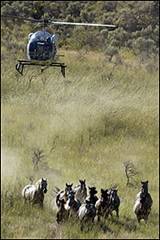
The National Audubon Society, which once romanticized the West’s wild horses, now calls them “feral equids” and wants thousands of them killed, as does the US Bureau of Land Management, The New York Times reported Sunday.

The Times noted there are 33,000 wild horses roaming BLM lands from Montana to California, and another 30,000 have been rounded up and are in holding facilities until somebody wants them. From the perspective of a mustang used to the wilds, this is probably like incarceration at Guantanamo Bay. From the perspective of BLM, continuing to spend $26 million a year to take care of all the horses it rounds up (below) is far too expensive.

image006.jpgThe Science Conservation Center in Montana, meanwhile, has written a rebuttal to the Audubon Society, saying that contraception would be better than killing to control the number of wild horses. But BLM itself, The Times reported, stands accused of having little interest in contraception.

Does any of this sound familiar?

For BLM substitute National Park Service; they’re both agencies of the Interior Department. For Audubon Society, substitute Marin Group of the Sierra Club; they’re both for the birds. For the Science Conservation Center, substitute the Humane Society of the US; they both oppose the Bush Administration’s applying to wildlife its “Just Say No” antipathy toward contraception. And for wild horses, substitute white deer; nativists dislike both animals for supposedly being non-native, even though they’ve been in North America for centuries.

fawn-follows.jpg

A fallow deer (commonly called a white deer) and her fawn. Photo by Janine Warner, founder of digitalfamily.com

Just how long has each species been in North America? George Washington released this country’s first white deer on his farm at Mount Vernon. Unfortunately, the Pacific West Region of the National Park Service appears to dismiss our first president as some distant, benighted fellow. As for the horse, it “began evolving on the North American continent 55 million years ago, before crossing the Bering land bridge and spreading through Asia and Europe, the June 28 Economist reported.

Spaniards reintroduced horses into North America during the 1500s, and they spread across the West. “In the 1700s there were so many mustangs in Texas that maps marked some areas merely as “Vast Herds of Wild Horses,” The Economist added. However, from 1920 to 1935, “hundreds of thousands of mustangs were sent to slaughter to provide cheap meat.”

BLM says there’s not enough forage for 33,000 wild horses on their 29 million-acre range and wants to kill 6,000 of them. Claiming there wasn’t enough forage for 1,000 exotic deer in their 75,000-acre range, the Park Service last year shot roughly 800 of them. Last week, the Park Service said it will soon shoot the rest.

I’m surprised by how frequently West Marin residents say one reason they hope Obama wins is that it would allow the Democrats to clean house in the Department of the Interior. Blood-lust, defiance, and vengeance have come to epitomize the department’s land-use management. These are not traits most of the public will tolerate forever.

With National Seashore Supt. Don Neubacher saying to hell with members of Congress, the lieutenant governor, and most West Marin residents, he’s going to kill deer, a peaceful protest is scheduled for 1 p.m. Sunday. Demonstrations will gather at the Sacred Heart Church parking lot in Olema and walk a quarter mile north along Bear Valley Road.

“People seeking food will see an opportunity to hunt, gather, or cultivate. People who are well fed, but seek spiritual sustenance in nature, will see a refuge. Wildlife biologists will see a laboratory, archeologists a dig, real estate developers a suburb, park managers a place of employment.” Mark Dowie of Inverness.

(From The Fiction of Wilderness published in the West Marin Review. The essay was adapted from an upcoming book Vital Diversities: Balancing Protection of Nature and Culture. Dowie teaches science and environmental reporting at the UC Berkeley Graduate School of Journalism.)

100_7739.jpg

A small group of Point Reyes National Seashore visitors buying oysters from Drakes Bay Oyster Company and quietly picnicking beside the water a couple of weeks ago.

100_7837_1_1.jpg

The tranquility at the oyster company contrasted with the folks screaming in excitement at another national park 200 miles away. In Yosemite, two rock climbers set a speed record for going up the face of El Capitan.

The climbers, one from Lafayette and one from Japan, shaved 2 minutes and 12 seconds off the 2 hour, 45 minute, and 35 second record held by two German brothers.

100_7740.jpg

Back at Drakes Bay, oyster-company owner Kevin Lunny is fighting an attempt by National Seashore Supt. Don Neubacher to close the oyster farm when its lease runs out in 2012.

Supt. Neubacher’s administration says the 125-year-old oyster farm is incompatible with a wilderness area. Of course, the oyster farm isn’t actually in a wilderness area. So far, the government has labeled Drakes Estero, the inlet where Lunny’s oyster company is located, merely “potential wilderness.”

100_7737.jpg

Drake’s Bay Oyster Company’s parking lot in the foreground and the Coast Guard’s white buildings in the background.

But it’s a stretch to call Drakes Estero even “potential wilderness.” By act of Congress, the land around it is reserved for agricultural. From the oyster farm, visitors can view not only this “pastoral zone” and traffic on Sir Francis Drake Boulevard but also a US Coast Guard Communications Station.

100_7831_1.jpg
One chunk of parkland that is in a designated wilderness area is El Capitan.

The 3,000-foot-high granite monolith is part of what the Park Service boasts is “one of the world’s greatest climbing areas.” Not surprisingly, members of the press and public were on hand for a week to hoot and holler as climbers Hans Florine and Yuri Hirayama repeatedly scrambled up El Capitan. Hirayama has said that if he climbs the rock again, he’ll bring a movie crew from Japan.

Encouraging an international hullabaloo in the Yosemite wilderness area is apparently appropriate when the national park is looking for good publicity. In their own way, national parks do a fair amount of huckstering. The National Seashore, for example, holds sandcastle contests at Drakes Beach every Labor Day to lure crowds to Point Reyes.

tunnelview2.jpgAll this commotion suggests that seeking solitude in nature to restore your soul can sometimes be more romantic than realistic — whether you’re wandering on Point Reyes or in Yosemite (right). Even without climbers and their fans, Yosemite’s wilderness is crawling with an estimated 500 black bears. If you don’t want your meditations disturbed, it’s better to follow the Savior’s advice (Matthew 6:6), and “when thou prayest, enter into thy closet.”

So what activities are appropriate in a “wilderness” area? That apparently depends on the park superintendent of the moment and whom he likes or doesn’t. Ever since Lunny helped organize the Point Reyes Seashore Ranchers Association so that ranchers could put up a united front in negotiations with the park, Supt. Neubacher’s Administration has made it clear they don’t like the oyster grower/beef rancher.

From a strictly environmental standpoint, Neubacher’s justification for trying to close Lunny’s oyster farm reveals the irrational way the Pacific West Region of the National Park Service is being administered these days. If this region of the Park Service is so fastidious it wants to close down a 125-year-old oyster farm to protect “potential wilderness” at Point Reyes, what the heck is the region doing promoting environmentally damaging rock-climbing competition in Yosemite’s “wilderness area?”

“As the number of climbers visiting the park has increased through the years, the impacts of climbing have become much more obvious,” the National Park Service acknowledges. “Some of those impacts include: soil compaction, erosion, and vegetation loss in parking areas, at the base of climbs, and on approach and descent trails, destruction of cliffside vegetation and lichen, disturbance of cliff-dwelling animals, litter, water pollution from improper human waste disposal, and the visual blight of chalk marks, pin scars, bolts, rappel slings, and fixed ropes.”

And what about the 2 million visitors a year the National Seashore attracts to Point Reyes. By any chance do they affect the wilderness around here more than a low-key, family-owned oyster company? Or the National Seashore’s filling in a wetland at Drakes Beach to provide parking for for this multitude… how did that preserve nature?

Given all this, just what does the Park Service mean when it talks about protecting the “wilderness?”

“‘When I use a word,’ Humpty Dumpty said, in a rather scornful tone, ‘it means what I choose it to mean — neither more nor less.'” — Alice’s Adventures in Wonderland.

« Previous Page — Next Page »