
History


More than 40 peaceful demonstrators, mostly from West Marin, walked from Sacred Heart Church in Olema to Point Reyes National Seashore headquarters Sunday in a last-ditch effort to discourage the the park from killing its few remaining fallow and axis deer. Despite public opposition, the park two weeks ago announced eradication was about to resume.

Opposition to Park Service plans for killing the fallow and axis deer has been so widespread that National Seashore Supt. Don Neubacher in 2005 temporarily placated the public with assurances that eliminating all 1,000 deer would take 15 years. There would be plenty of time to find other approaches for controlling herd sizes between now and then, he told a public meeting.

100_0099.jpg

But, like so many of Supt. Neubacher’s public statements, the assurance was untrue, and late last fall, the park set out to kill off all 1,000 as quickly as possible.

Moreover, the brutal way in which the first 800 or so deer were killed, many left in the wild to suffer long, agonizing deaths from gut wounds, offended hunters as much as the general public.

100_0103.jpg

Eventually, US Senators Dianne Feinstein and Barbara Boxer, Speaker of the House Nancy Pelosi, three other Bay Area members of Congress, Lynn Woolsey, George Miller, and Anna Eshoo, and Lt. Governor John Garamendi all called for a moratorium on the killing while the use of contraception was studied.

But Supt. Neubacher was as quick to thumb his nose at members of Congress and the lieutenant governor as at members of the public. A bureaucrat who thrives on defiance, Neubacher two weeks ago rejected contraception studies by the Humane Society of the United State, which is willing to help administer the birth control. He instead announced he would proceed with the killing posthaste.

watching-over-the-heard3.jpgIn trying to justify his nativistic eradication of un-American deer in the park, Supt. Neubacher’s administration, as most West Marin residents realize, fabricated the problems the deer were supposedly causing.

The most notable untruth was that the few fallow (right) and axis deer were out-competing the park’s native blacktail deer. In fact, the park and land immediately around it has, if anything, an overabundance of blacktail deer, as evidenced by all the roadkills. (Photo by Janine Warner, founder of digitalfamily.com)

But then, Supt. Neubacher may be one of the most dishonest public officials around that isn’t in prison; witness his deceitful, bully-boy attempts to drive Drakes Bay Oyster Company out of business. Here’s a press release distributed last week by the Business Wire. I’ll be coming back to the topic in future postings:

MARIN COUNTY’S DRAKES BAY OYSTER CO. ABUSED BY GOVERNMENT AGENCY, ACCORDING TO U.S. DEPARTMENT OF INTERIOR INSPECTOR GENERAL REPORT

Business Wire, July 23, 2008

REPORT SHOWS NATIONAL PARK SERVICE USED FALSE INFORMATION, BUREAUCRATIC RED TAPE IN ATTEMPT TO RUIN MARIN COUNTY BUSINESS

SAN FRANCISCO — A report issued by the Office of the Inspector General for the U.S. Department of the Interior has concluded that the National Park Service knowingly used false scientific data to bolster its attempt to drive a local oyster company from the Point Reyes National Seashore area.

The investigation conducted by the Inspector General reveals that Park Service officials made false scientific claims, misled other federal authorities and attempted to hide data that called into question the veracity of the Park Service’s case. The report details how the Inspector General’s Computer Crimes Unit recovered an email apparently deleted by the National Park Service’s lead scientist that showed the government agency was knowingly misrepresenting environmental data.

oysters.jpgPark Service officials are accused of engaging in a campaign of intimidation and disinformation to damage the operation of the Drakes Bay Oyster Company. Investigators concluded there is no scientific evidence to support Park Service claims that the oyster company was responsible for pollution or damage to the environment.

Drakes Bay Oyster Company was purchased in 2004 by Kevin Lunny [at left with oyster “seed”] along with his brothers, Robert and Joe Jr. The Lunny family owns the Historic G Ranch and has been a fixture of the Point Reyes community for more than 60 years. The Lunnys are committed to organic ranching practices and policies that protect the environment in western Marin County. (Photo by Janine Warner, founder of digitalfamily.com)

The Lunny family says it will now seek “restitution for interference and harm to its business.” The family praised Senator Dianne Feinstein for demanding justice in this case of alleged government abuse of a small family business.

“With the Inspector General findings, we at last have vindication of the Lunny family after four years of frustration and government abuse,” said Sam Singer, a spokesman for the Drakes Bay Oyster Company. “The Lunnys purchased Drakes Bay Oyster Company with the full intent of restoring a Point Reyes business and contributing to an important local industry. What the National Park Service tried to do here in misleading the Marin County Board of Supervisors and penalizing citizens at the expense of the truth was nothing short of outrageous.”

“This report shows that the National Park Service under the jurisdiction of the U.S. Department of the Interior fabricated and falsified the science to drive Mr. Lunny and his family out of business,” said Mr. Singer. “This report is devastatingly critical and calls into question Interior Secretary’s Kempthorne’s newly announced ethics policy. We expect wholesale changes in the Department to come from this unfortunate episode.”

100_7741.jpgIn April 2007, Park Service officials had threatened to seek civil and criminal charges against the Lunnys, claiming that their oyster beds were harming seals, damaging eelgrass and polluting waterways. “Based on the research conducted by several scientists, the Inspector General concluded that the data used by the Park Service was flawed and unreliable,” said Mr. Singer.

[Kayakers use the oyster company premises for a haulout site.]

“My family and my business have been harmed,” said Kevin Lunny. “The Inspector General detailed numerous instances where science was manipulated, facts were distorted, and false accusations were made. All we wanted to do was improve a local oyster company and contribute to the Point Reyes community. We are encouraged by the Inspector General’s report but the federal government has farther to go in atoning for what happened here. The Park Service has broken trust and good faith with the ranchers, farmers, and citizens of West Marin.”

“In the end, this is about private citizens standing up to abusive treatment by their government,” Mr. Lunny said. “We said all along that the Park Service was in the wrong and now we have been proven right. The Lunny family has lived, farmed, and ranched in Point Reyes for more than six decades. We supported the Seashore’s creation and enjoyed an outstanding relationship until recently. It is our hope and prayer that the Park Service will work with us to reestablish a positive relationship.”


One of the luxuries of being retired is that I can do all the late-night reading I want, and I’m continually being amazed by what I read.

Remember the shortwave radiomen in those old movies about World War II: “Come in, Rangoon! Come in, Rangoon!” When I was a kid, the family’s floor-standing radio had shortwave bands, and I recall the fun I had picking up broadcasts from far and wide. But like everything else from that era, shortwave radio faded out, or so I had thought.

The London-based Economist reported June 21 that while shortwave radio has pretty much gone off the air in Europe and North America, it’s still widespread in Asia and especially Africa. The BBC World Service, for example, has a worldwide radio audience of 182 million, of which 105 million still listen on shortwave, The Economist reported. In Nigeria, shortwave use is actually growing.

100_77721.jpg

‘Pride in Craftsmanship‘ photographed in San Rafael.

While visiting Rome some years ago, I ended up staying across the street from what appeared to be a one-building country .and it wasn’t the Vatican. A sign on the front said, “Knights of Malta,” and I could see parked cars with Knights of Malta license plates in the building’s courtyard.

All that came to mind after the inner council of this order of monks, also known as Sovereign Military Hospitaller Order, elected Friar Matthew Festing, 58, of Great Britain its new grand master to replace Friar Andrew Bertie, who died in February.

The “sovereign” Knights of Malta, who do international aid work, have 12,500 members worldwide but no territory of their own, Napoleon having seized the Island of Malta from them in 1798. The order actually began in 1080 AD, took part in the Crusades, and after the Christian defeat ruled first over Rhodes and then over Malta.

180px-flag_of_the_sovereign_military_order_of_maltasvg.pngNot only do the Knights of Malta have their own license plates, I read last week that they issue their own passports, have their own flag (right), stamps, and currency, actually are widely recognized as sovereign, and have diplomatic relations with 99 countries.

For two centuries after the loss of Malta to Napoleon, the nation had no country, merely headquarters in downtown Rome, until 1999 when the government of Malta agreed to let the knights repossess historic Fort St. Angelo for 99 years. As a result, the Knights of Malta/ Sovereign Military Hospitaller Order, is probably the only sovereign nation in the world that leases its homeland.

image002.jpg

The National Audubon Society, which once romanticized the West’s wild horses, now calls them “feral equids” and wants thousands of them killed, as does the US Bureau of Land Management, The New York Times reported Sunday.

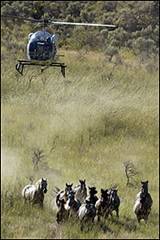
The Times noted there are 33,000 wild horses roaming BLM lands from Montana to California, and another 30,000 have been rounded up and are in holding facilities until somebody wants them. From the perspective of a mustang used to the wilds, this is probably like incarceration at Guantanamo Bay. From the perspective of BLM, continuing to spend $26 million a year to take care of all the horses it rounds up (below) is far too expensive.

image006.jpgThe Science Conservation Center in Montana, meanwhile, has written a rebuttal to the Audubon Society, saying that contraception would be better than killing to control the number of wild horses. But BLM itself, The Times reported, stands accused of having little interest in contraception.

Does any of this sound familiar?

For BLM substitute National Park Service; they’re both agencies of the Interior Department. For Audubon Society, substitute Marin Group of the Sierra Club; they’re both for the birds. For the Science Conservation Center, substitute the Humane Society of the US; they both oppose the Bush Administration’s applying to wildlife its “Just Say No” antipathy toward contraception. And for wild horses, substitute white deer; nativists dislike both animals for supposedly being non-native, even though they’ve been in North America for centuries.

fawn-follows.jpg

A fallow deer (commonly called a white deer) and her fawn. Photo by Janine Warner, founder of digitalfamily.com

Just how long has each species been in North America? George Washington released this country’s first white deer on his farm at Mount Vernon. Unfortunately, the Pacific West Region of the National Park Service appears to dismiss our first president as some distant, benighted fellow. As for the horse, it “began evolving on the North American continent 55 million years ago, before crossing the Bering land bridge and spreading through Asia and Europe, the June 28 Economist reported.

Spaniards reintroduced horses into North America during the 1500s, and they spread across the West. “In the 1700s there were so many mustangs in Texas that maps marked some areas merely as “Vast Herds of Wild Horses,” The Economist added. However, from 1920 to 1935, “hundreds of thousands of mustangs were sent to slaughter to provide cheap meat.”

BLM says there’s not enough forage for 33,000 wild horses on their 29 million-acre range and wants to kill 6,000 of them. Claiming there wasn’t enough forage for 1,000 exotic deer in their 75,000-acre range, the Park Service last year shot roughly 800 of them. Last week, the Park Service said it will soon shoot the rest.

I’m surprised by how frequently West Marin residents say one reason they hope Obama wins is that it would allow the Democrats to clean house in the Department of the Interior. Blood-lust, defiance, and vengeance have come to epitomize the department’s land-use management. These are not traits most of the public will tolerate forever.

With National Seashore Supt. Don Neubacher saying to hell with members of Congress, the lieutenant governor, and most West Marin residents, he’s going to kill deer, a peaceful protest is scheduled for 1 p.m. Sunday. Demonstrations will gather at the Sacred Heart Church parking lot in Olema and walk a quarter mile north along Bear Valley Road.

“People seeking food will see an opportunity to hunt, gather, or cultivate. People who are well fed, but seek spiritual sustenance in nature, will see a refuge. Wildlife biologists will see a laboratory, archeologists a dig, real estate developers a suburb, park managers a place of employment.” Mark Dowie of Inverness.

(From The Fiction of Wilderness published in the West Marin Review. The essay was adapted from an upcoming book Vital Diversities: Balancing Protection of Nature and Culture. Dowie teaches science and environmental reporting at the UC Berkeley Graduate School of Journalism.)

100_7739.jpg

A small group of Point Reyes National Seashore visitors buying oysters from Drakes Bay Oyster Company and quietly picnicking beside the water a couple of weeks ago.

100_7837_1_1.jpg

The tranquility at the oyster company contrasted with the folks screaming in excitement at another national park 200 miles away. In Yosemite, two rock climbers set a speed record for going up the face of El Capitan.

The climbers, one from Lafayette and one from Japan, shaved 2 minutes and 12 seconds off the 2 hour, 45 minute, and 35 second record held by two German brothers.

100_7740.jpg

Back at Drakes Bay, oyster-company owner Kevin Lunny is fighting an attempt by National Seashore Supt. Don Neubacher to close the oyster farm when its lease runs out in 2012.

Supt. Neubacher’s administration says the 125-year-old oyster farm is incompatible with a wilderness area. Of course, the oyster farm isn’t actually in a wilderness area. So far, the government has labeled Drakes Estero, the inlet where Lunny’s oyster company is located, merely “potential wilderness.”

100_7737.jpg

Drake’s Bay Oyster Company’s parking lot in the foreground and the Coast Guard’s white buildings in the background.

But it’s a stretch to call Drakes Estero even “potential wilderness.” By act of Congress, the land around it is reserved for agricultural. From the oyster farm, visitors can view not only this “pastoral zone” and traffic on Sir Francis Drake Boulevard but also a US Coast Guard Communications Station.

100_7831_1.jpg
One chunk of parkland that is in a designated wilderness area is El Capitan.

The 3,000-foot-high granite monolith is part of what the Park Service boasts is “one of the world’s greatest climbing areas.” Not surprisingly, members of the press and public were on hand for a week to hoot and holler as climbers Hans Florine and Yuri Hirayama repeatedly scrambled up El Capitan. Hirayama has said that if he climbs the rock again, he’ll bring a movie crew from Japan.

Encouraging an international hullabaloo in the Yosemite wilderness area is apparently appropriate when the national park is looking for good publicity. In their own way, national parks do a fair amount of huckstering. The National Seashore, for example, holds sandcastle contests at Drakes Beach every Labor Day to lure crowds to Point Reyes.

tunnelview2.jpgAll this commotion suggests that seeking solitude in nature to restore your soul can sometimes be more romantic than realistic — whether you’re wandering on Point Reyes or in Yosemite (right). Even without climbers and their fans, Yosemite’s wilderness is crawling with an estimated 500 black bears. If you don’t want your meditations disturbed, it’s better to follow the Savior’s advice (Matthew 6:6), and “when thou prayest, enter into thy closet.”

So what activities are appropriate in a “wilderness” area? That apparently depends on the park superintendent of the moment and whom he likes or doesn’t. Ever since Lunny helped organize the Point Reyes Seashore Ranchers Association so that ranchers could put up a united front in negotiations with the park, Supt. Neubacher’s Administration has made it clear they don’t like the oyster grower/beef rancher.

From a strictly environmental standpoint, Neubacher’s justification for trying to close Lunny’s oyster farm reveals the irrational way the Pacific West Region of the National Park Service is being administered these days. If this region of the Park Service is so fastidious it wants to close down a 125-year-old oyster farm to protect “potential wilderness” at Point Reyes, what the heck is the region doing promoting environmentally damaging rock-climbing competition in Yosemite’s “wilderness area?”

“As the number of climbers visiting the park has increased through the years, the impacts of climbing have become much more obvious,” the National Park Service acknowledges. “Some of those impacts include: soil compaction, erosion, and vegetation loss in parking areas, at the base of climbs, and on approach and descent trails, destruction of cliffside vegetation and lichen, disturbance of cliff-dwelling animals, litter, water pollution from improper human waste disposal, and the visual blight of chalk marks, pin scars, bolts, rappel slings, and fixed ropes.”

And what about the 2 million visitors a year the National Seashore attracts to Point Reyes. By any chance do they affect the wilderness around here more than a low-key, family-owned oyster company? Or the National Seashore’s filling in a wetland at Drakes Beach to provide parking for for this multitude… how did that preserve nature?

Given all this, just what does the Park Service mean when it talks about protecting the “wilderness?”

“‘When I use a word,’ Humpty Dumpty said, in a rather scornful tone, ‘it means what I choose it to mean — neither more nor less.'” — Alice’s Adventures in Wonderland.

This is a story about Point Reyes Station’s ubiquitous pink roses and how I once happened to rescue a few wild ones.

100_7713.jpg
One of the many bicyclists passing through town pedals past climbing roses in front of West Marin School.

When I came to town in 1975, Toby’s Feed Barn was located in the old Livery Stable building at Third and B Streets in Point Reyes Station. The Tomales Bay Foods building next door was a haybarn. In those days, Toby’s Feed Barn was just that, an outlet for hay transported by Toby’s Trucking. Some of it was grown on family land in Nevada.

In 1976, Toby’s Feed Barn moved into the old Diamond National lumber building on the main street where it now sells everything from bales of hay to gourmet foods to fine art. Toby’s Trucking, which already had facilities in Petaluma, moved the last of its operation out of Point Reyes Station. The livery stable building, where trucks had been serviced and hay stored, was sold a couple of years later along with the haybarn.

Toby’s Feed Barn and Trucking had begun in 1942, so there was an accumulation of old truck parts and other detritus of a trucking-and-hay business to be cleared away before the buildings changed hands. Back then, John’s Truck Stop was located on Fourth Street where the Pine Cone Diner is today, and watching the cleanup from across the way was owner John Ball.

100_7636_1.jpg
Wild roses transplanted 30 years ago to my cabin. Unlike many roses, these are pretty much ignored by deer.

The Truck Stop owner had once been a driver for now-deceased Toby Giacomini, and he asked if he could have some of the wild roses growing where the cleanup was underway. “Help yourself!” Toby immediately responded. John took a few and encouraged the late Lt. Art Disterheft of Olema, then commander of the Sheriff’s Substation, to dig up a few more for himself.

Art, as it happened, had just come down with the flu and was in no shape to dig up roses, so he passed the offer along to me. There were three degrees of separation between Toby’s “Help yourself!” and me, but I accepted nonetheless. After all, I reasoned, the area would soon be cleared, which it was.

100_7730.jpgDigging up the roses was an amazing experience. It took a pick, as well as a shovel, to free them, for they were not growing in topsoil, as you and I think of it.

These roses were rooted mostly in clay, baling wire, and old engine oil. While moving them, I had to worry as much about getting greasy as getting pricked.

The roses’ hardiness was, however, encouraging. The wind across my pasture on the hill sometimes blows so relentlessly that it had withered all the flowers I’d tried to grow around the cabin. I figured these roses could withstand anything, and they have. In fact, without their annual pruning, my hot tub would soon be overgrown by a prickly, pink jungle.

The rose now growing in front of my deck, Rosa Californica, is one of less than a dozen native to this state.

In downtown Point Reyes Station, an example of a five-petaled antique rose can be seen at the corner of Highway 1 and Mesa Road (above) in front of Jane Quattlander’s home.
100_7655_1.jpg

Several varieties of domestic pink roses have gone feral around town, for birds can spread rose seeds. These unidentified roses are growing at Bivalve overlooking the foot of Tomales Bay. Bivalve, now little more than a dirt turnout off Highway 1, was once a whistlestop on the narrow-gauge-rail line between Point Reyes Station and Cazadero.

100_7704_2.jpg

Climbing roses along Highway 1 frame a view of Black Mountain.

Several West Marin towns are associated with particular flowers. An abundance of nasturtiums helps give Stinson Beach its colorful character. Primroses have become symbols of Inverness, thanks largely to the Inverness Garden Club’s annual Primrose Tea. With pink roses dotting so many Point Reyes Station vistas, we’re obviously the town with the rosiest outlooks.

100_7717_2.jpg
An immense thicket of climbing roses along Highway 1 marks the southern edge of Point Reyes Station. This wall of thorns and pink blossoms borders the entrance to the Genazzi Ranch.

100_7425_11.jpg

Turnout was light today, Tuesday, for California’s state primary elections, mainly because the state had already held its presidential primary on Feb. 5. Waiting for voters at the Point Reyes Station polling place in the firehouse are election workers (from front): Doug Long, Cathleen Austin, and Cindy Knabe.

US Senator Barack Obama today clinched the Democratic presidential nomination, as numerous news organizations early this afternoon began projecting he would.

Acknowledging her opponent’s commanding lead in delegates to the nominating convention, Senator Hillary Clinton told Democratic politicos in New York that she is willing to be Obama’s running mate.

220px-barack_obama.jpgSenator Obama, 46, is the first black presidential nominee of a major US political party.

Obama was born in Honolulu to a Kenyan father and a white American mother, who met at the University of Hawaii. His parents soon separated, however, and eventually divorced. His mother’s second husband was Indonesian, and when he was six, Obama moved to Indonesia for four years. He then returned to Hawaii where he lived with his maternal grandparents while attending 5th through 12th grades.

Obama graduated from Columbia University where he majored in Political Science, specializing in International Relations. In 1991, he received a law degree magna cum laude from Harvard Law School.

From 1993 to 2004, Senator Obama taught Constitutional Law parttime at the University of Chicago Law School while also working as an attorney. He was elected to the Illinois State Senate in 1996 and the US Senate in 2004.

100_5259.jpgMeanwhile, this news blog at 10 a.m. today (which is when I got up) projected Supervisor Steve Kinsey and Congresswoman Lynn Woolsey would easily win their races.
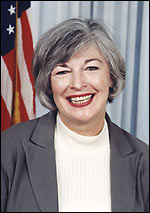
Incumbent Kinsey (left) ran unopposed in the nonpartisan Marin County race for the Fourth District.

He will now serve his fourth term on the Board of Supervisors, representing all of West Marin, along with pieces of Larkspur, Corte Madera, and San Rafael.

lynn_woolsey.jpgIncumbent Woolsey (right), who represents Marin and Sonoma counties in the US House of Representatives, likewise ran unopposed in the Democratic primary.

In November, Woolsey will face Michael Halliwell, who was unopposed in today’s Sixth District Republican primary. Woolsey has already served eight terms in the House, where she has one of the most liberal voting records of any member.

photo50.jpgUpdate on the State Senate Democratic Primary: With 43 percent of the vote, Assemblyman Mark Leno handily outdistanced Assemblyman Joe Nation (29.3 percent) and incumbent Carole Migden (27.7 percent) in the Third State Senate District.

The district includes Marin County and parts of San Francisco and Sonoma counties.

Leno (left) will face Republican Sashi McEntee in November’s general election. McEntee ran unopposed in today’s Republican primary.

The Third State Senate District, like Woolsey’s Sixth Congressional District, is overwhelmingly Democratic, and a victory in either Democratic primary is often tantamount to election.

The 59th annual Western Weekend in Point Reyes Station got off to a merry, but tiny, start Saturday at the Dance Palace. In a large corral across Sixth Street, Point Reyes-Olema 4-H Club members showed a total of only half a dozen dairy cows and heifers.

“Where are all the other animals?” asked architect Sim Van der Ryn, a long-time resident of Inverness. But aside from five chickens and five rabbits in cages outside the back door of the Dance Palace, there weren’t any more.

100_7365.jpgJanelle Kehoe’s Holstein cow was the livestock show’s grand champion.

As it happened, a copy of The Point Reyes Light with the 1995 livestock show results was lying around my cabin, and after Saturday’s show, it occurred to me to compare the number of entries this year with the number of winners back then. I was shocked by how dramatically participation has dropped off.

The 4-H Fair winners 13 years ago included: nine beef cattle (this year, no entries); 12 dairy cows (this year, six entries); six dogs (none); 10 horses (none); four sheep (none); three cavies aka guinea pigs (none); three small animals/pets (none); 11 rabbits (five).
100_7394.jpg

One of the most fascinating facets of poultry competition in the 4-H Fair amounts to herding chickens with a pencil. Competitors are not supposed touch their bird with their hands while herding it down a folding table, so Frankie Kohrdt is carefully holding back although her chicken seems perplexed.

100_7358.jpgNathan Hemelt’s Holstein was named reserve champion in the dairy cow showmanship competition.

100_7387.jpg

With great concentration, River Aguire uses a pencil to nudge his wayward chicken down the judging table. Watching intensely are all his fellow competitors (from left): Frankie Kohrdt, McKenna Kohrdt, Adriano Puppo, and Olivia Puppo.
100_7382.jpg

Carol Horick of Point Reyes Station keeps a tight lead on a rambunctious heifer during “adult showmanship” competition.

Instead of an animal show that in years past lasted all day, Saturday’s was over in less than two hours. And it would have been even shorter were it not for a mostly for-fun competition, adult showmanship. Adults, including parents of 4-H members and mere bystanders, were rounded up to show cows. Judges asked the adults not to chose their own children’s cow to show, and most complied.

Why is the livestock show shrinking so dramatically with each passing year? Certainly one reason is the reduction in ranching throughout West Marin.

Some ranches for economic reasons have had to greatly scale back, for example by replacing a dairy operation with beef-cattle grazing. A number of the ranches acquired by the National Park Service have been shut down. And the demographics of West Marin’s ranching community are also changing; fewer young parents can afford to live and raise 4-H members here.

In addition, 4-H clubs from throughout Marin and southern Sonoma counties once took part in the livestock show. No longer.

100_7403_1.jpg

Ruler of the roost: Adriano Puppo’s chicken stands head and tail above the chicken belonging to his older sister Olivia.

The 4-H’ers father said that as newly hatched chickens, the two spent last winter in the family garage where they took to this close arrangement for staying warm.

Now that the weather is warmer, the two still prefer a vertical arrangement when hanging out together, and Olivia’s chicken pushes its way under her brother’s chicken almost as often as his chicken climbs on top.

Traditionally, the Western Weekend parade was held the day after Saturday’s livestock show, but this year there were “scheduling conflicts,” according to the sponsors, the West Marin Lions and Rotary clubs.

The parade down the main street of Point Reyes Station will begin at noon Sunday, June 8. There will be a silent auction from 10 a.m. to 4 p.m. that day in the Dance Palace.

West Marin Senior Services will hold a chili and cornbread cookoff at 1 p.m. at Toby’s Feed Barn. And Halleck Creek Riding Club for the Disabled will sponsor a Cow-flop Drop; the fundraiser uses a grided field behind Toby’s and is sort of like roulette, with a cow and her plop substituted for a croupier and ball.

In addition, Marin Farm Bureau and Organics will hold a barbecue at Toby’s from 1 to 3 p.m., and winners of the Western Weekend raffle will be announced at 2 p.m. at Toby’s.

A Western Weekend Queen’s Dance will be held from 8 to 10 p.m. Saturday, June 7, in the Dance Palace.

Supt. Don Neubacher of the Point Reyes National Seashore and park biologist Natalie Gates have been misleading the public about alternatives to the park’s current program to eradicate exotic deer. That was the word this past week from the senior vice president for wildlife of the Humane Society of the United States.

The Humane Society of the US, as well as the Marin Humane Society, Wildcare, and In Defense of Animals, has criticized the National Seashore’s eradication of non-native fallow and axis deer as cruel and unnecessary.

100_943_1.jpgThirty years ago, the Citizens Advisory Commission to the Golden Gate National Recreation Area and Point Reyes National Seashore held a series of public hearings to decide the optimum size of the two herds. Wildlife experts from around the country took part, as did hunting organizations and West Marin residents.

Commissioners, who were appointed by the US Secretary of the Interior and mostly nominated by Bay Area local governments, ultimately decided the ideal herd size was 350 deer apiece.

That quota was erratically maintained through culling until 1994 when Neubacher (right) became superintendent and stopped the culling. At that point, the fallow herd in particular began growing.

In 2002, the citizens’ commission expired, and when the Neubacher Administration decided to eradicate the deer, no public hearings were held. When a public meeting was finally held, the public had to content itself with listening to panelists picked by the park. By way of avoiding a general discussion that might have worked out compromise acceptable to most of the public, the park divided the crowd into focus groups, with opposition to slaughtering deer treated primarily as a marketing problem.

The fallow deer, native to the Near East, and the axis deer, native to South Asia, have been on Point Reyes since 1948. The park opened in 1965.

Citing the herds’ growth and their ancestors’ having been non-native, the Neubacher Administration in recent months has been attempting to eradicate all 1,000 to 1,200 of the deer.

About 180, including only a handful of axis deer (as seen in photo below by Trish Carney), still survive.

2082275718_842210215e_m.jpgAnimal-rights groups have urged the National Park Service to manage the herds’ sizes with contraception.

The Neubacher Administration has responded that the hunting company it has hired hasn’t been having much success with the contraceptive it’s using, GonaCon.

National Seashore officials made misleading statements in dismissing the effectiveness of the contraceptive, PZP, used to manage herds at other parks, the Humane Society notes.

Here are the Humane Society’s “clarifications and explanations” of recent public claims made by [biologist] Natalie Gates and [Supt. Don] Neubacher at Point Reyes National Seashore.

92x133_grandy_john.jpgBy John Grandy, PhD, Senior Vice President (right), The Humane Society of the United States

1. With regard to the PZP contraceptive [supposedly being] outdated and less advanced:

PZP is fully tested and completely safe with the adjuvants [pharmacological agents added to a drug to increase its effect] and techniques I recommend in my report, as the numerous peer-reviewed papers I cite demonstrate conclusively. These studies have been conducted over more than 15 years and have included all phases of the reproductive cycle.

There is no comparable data for GonaCon [the deer contraceptive used by the hunting company hired by the park, White Buffalo]. There is no published peer reviewed literature regarding the safety and efficacy of GonaCon and the adjuvants used with it. And there are numerous anecdotal reports of death and/or abscesses or ulcerous lesions in animals treated with GonaCon and its adjuvant.

True, PZP has been in use longer, but the safety and reliability are proven without question.

may-5-08-monday.jpg

Surviving fallow deer. Ear tags show that two of the does have received contraception. (Fallow deer photos by Ella Walker)

2. With regard to Natalie Gates’ comment the [Humane Society’s] White Paper approach would not be effective and that it is not practical to use only contraception to eliminate all non-native deer.

These are simply self-serving rephrasings of material in my report that allow her to give the answer she wants people to hear. The paper does not suggest that all deer in the park can be eliminated using the PZP contraceptive. In fact, it clearly states exactly the opposite. What it does suggest and indeed proves with peer-reviewed literature is that a deer population as small as the one that now exists (~)180 can be conscientiously and effectively managed to meet the National Park Service’s biological objectives for vegetation in the Point Reyes National Seashore with PZP.

3. With regard to the cost of the PZP contraceptive versus GonaCon: We do not know what GonaCon costs. I summarized the cost of PZP based on peer-reviewed literature and our direct experience, as follows:

The PZP vaccine and darts are relatively inexpensive; actually less than $50 per treatment (primer dose at $21 plus booster does at $21 plus two darts at $3; and that is only for the first year. Thereafter the cost is about $25 per year). The primary cost in such programs is labor to administer the vaccine (Rutberg 2005).

sweetestmay-5.jpgAt Fire Island National Seashore, where deer were accessible and capture for tagging [right, as is being done in the Point Reyes National Seashore] was not necessary, treatments took 1.4 hours per deer (Naugle et al. 2002). At another site, contraceptive darting took 1.6 hours per deer (Rutberrt et al. 2004).

The [National Seashore’s] environmental-impact statement assumes six hours per inoculation (p. 37). Even at six hours per doe, treatment of 80 does would take 60 person-days per year (citations in my report).

Frankly, the National Park Service estimate of the cost of PZP vaccination is based on nothing but speculation and is grossly inaccurate, as this peer-reviewed information shows.

4. With regard to statements from [regional Park Service director Jon] Jarvis and [National Seashore Supt.] Neubacher regarding the need to kill a few deer as part of a contraceptive program.

It may be necessary to euthanize one or more of the deer currently treated with GonaCon if their reported symptoms are causing such pain and suffering that this is the only alternative. If deer are treated with the PZP contraceptive, there is no need to kill, immobilize or tag these deer if the protocol used successfully with white-tailed deer at Fire Island National Seashore is followed.

5. With regard to Neubacher’s claim that he is simply following federal legislation.

It is, of course, true that Neubacher is acting under his interpretation of the broad authority of the enabling legislation and subsequent amendments for Point Reyes National Seashore even as he attempts to eliminate the deer. It is surprising, at the least, that axis and fallow deer were not designated a cultural and historic resource at the time the National Seashore was created. Indeed, numerous reports of past activities at the National Seashore, as well as annual reports, suggest that they were often treated as such, even if they were not so designated.

However, to remove any ambiguity regarding their importance as a cultural and historic resource for the park and environs, we suggest including a rider such as I suggested in my report (Page 12) to designate fallow and axis deer a cultural and historic resource for the Point Reyes National Seashore and require that they be managed as such.

This approach has been successfully followed in Assateague Island National Seashore and Cape Lookout National Seashore.

Fifty years ago this month, the late columnist Herb Caen of The San Francisco Chronicle coined the word “beatnik.”

As it happened, a recognized Beat Generation, epitomized in literature by poet Allen Ginsberg and novelist Jack Kerouac, had made its presence known over the previous decade, and six months earlier, the Soviet Union had begun the “space race” by launching Sputnik, the first satellite to orbit the globe. With his typical whimsy, Caen in April 1958 blended the two names into beatnik.

This much of what I remember I can confirm. What I can’t confirm is my vague recollection of why Caen did it. I welcome any correction, but if my memory is accurate, it was in reference to an otherwise-not-bad Beat who one day lost it and ended up destroying property in North Beach.*

On this mostly unnoticed but nonetheless historic anniversary, it would seem appropriate to comment on Sausalito’s No Name bar. It too began five decades ago, but its connection to the Beat Era runs deeper.

100_7104_1.jpg

“When the bar first opened, it was a beatnik bar,” Michael Aragon, drummer and bandleader, told me last week. (Seen here performing with Aragon are Rob Roth on sax and Pierre Archain on bass.)

“Lots of folks like Jack Kerouac, [actor] Sterling Hayden, Allen Ginsberg, and the like hung out there and played chess, read poetry, wore lots of berets and horned-rimmed glasses, and played bongo drums,” said Aragon, who schedules the music at the No Name. “And how can we forget the cigarettes?”

100_7166_1.jpg

In the No Name’s protected garden where smoking is still permitted, Michael Hall plays chess four times a week, as he has for 20 years. Hall, an electrical contractor who lives on a houseboat, is but one of the bar’s regular chess players.

Along with chess and smoking, cool jazz and bebop from the Beat Era are alive and well and living in Sausalito. “I have been blessed with the opportunity to keep jazz music alive at the No Name for the past 25 years,” Aragon said. “This is the longest-running, continuous jazz gig in Marin County.

“This in itself is a miracle, considering that most people believe that the only way to survive in the club world is to constantly inundate the mind with tremendous amounts of decibels.”
100_7165_1.jpg

Trombonist Mal Sharpe, who heads the Big Money in Jazz Band, has played Dixieland jazz Sunday afternoons at the the No Name for roughly 15 years, he told me this week. Thanks to YouTube, Sharpe and his band can be seen and heard playing at the bar by clicking on The Sunny Side of the Street or St. Louis Blues.

“The bar is a unique place,” Aragon remarked, “because on one side of you there could be sitting a homeless person and on the other side, someone that owns a $50 million yacht. What I have tried to do over the years is make sure that no matter what, everyone is treated the same.”

There is music at the bar seven nights a week. On Friday and Saturday, jazz groups play from 9 p.m. to 12:30 a.m., and on Sundays, there is Dixieland from 3 to 7 p.m.

On Monday, Wednesday, and Thursday, the No Name features blues and folk music from 8:30 p.m. to midnight. On Tuesdays, an open microphone is held from 8:30 p.m. to midnight.

100_7161_1.jpgThe bar is now under its fifth ownership, Aragon told me, and as the sign out front reveals, No Name is not really the bar’s name. It literally is a bar with no name. Check the phone book; you’ll find it listed as “no name 757 Bridgeway Sau.”

There’s also no cover charge, and the audience is always a mix of oldtimers who were around for the Beat Era, tourists, and fans of live-music, especially jazz.

* Over time, the term “beatnik” came to refer anyone with the supposed trappings of Beat writers and artists: berets, dark glasses, dark clothing, and a propensity to use hipster slang. For Ginsberg and Kerouac, “Beats” were down-and-out wanderers who also were visionaries. Both writers resented their quixotic outcasts’ being confused with “beatniks.”

100_7135.jpg

‘Still Life With Raccoon‘ (My school of art obviously lies somewhere between R. Crumb and Art Nouveau)
new-014.jpg

Black Mountain with the Giacomini Wetlands in the foreground. Much of what is now Nicasio Reservoir, Point Reyes Station, and the land in between was once owned by the Black family, whose daughter Mary married Dr. Galen Burdell, a dentist. When the narrow-gauge railroad between Cazadero and Sausalito went into service in 1875, with a stop in a pasture his wife had inherited. Dr. Burdell subdivided the pasture and created Point Reyes Station. (Photo by Linda Sturdivant of Inverness Park)

bild5415b_1_2_1.jpg

Point Reyes Station as seen from an airliner. (One of the plane’s jets is visible at upper right.) In the center at the top of the photo is Nicasio Reservoir with Black Mountain just below it while at the bottom, Papermill Creek empties into Tomales Bay. The row of whitish roofs at right is along the main street of town. Guido Hennig, a German friend working in Switzerland, shot this photo while en route from Europe.

bus-making-u-turn_1.jpgA tight maneuver. Linda Sturdivant while driving home with her daughter Seeva one afternoon last week came upon this full-sized bus making a U-turn on the levee road.

The levee road (a section of Sir Francis Drake Boulevard) used to be straight. The jog in it was created by the 1906 Earthquake. Land on both sides of the San Andreas Fault, which runs under the roadway, was offset 20 feet by the temblor.

Linda, by the way, takes care of people’s pets when they’re away. Recent wards (each owned by a different master) have included a cat, a rat, and a duck. Sounds like the start of political joke.

100_7150.jpg

So that’s how things look around town these days. And if you’re interested in some blossoms for your own cabin, Mrs. Raccoon appears to be selling some nice ones.

Chileno Valley ranchers Mike and Sally Gale several weeks ago returned home after spending a fortnight in the Middle East visiting their son Ivan, a newspaperman in the United Arab Emirates (UAE).

100_6334.jpg

Sally, Mike, and Ivan Gale at their Chileno Valley ranch last Christmas.

In 2003 and 2004, Ivan was an excellent reporter for The Point Reyes Light, winning three national and three statewide journalism awards during those two years. Ivan left The Light to attend Columbia University’s Graduate School of Journalism and earned two master’s degrees in Communications, one with a specialty in Science Reporting.

From there, he managed to land a job in the UAE, where for two years he was a business reporter for The Gulf News in Dubai. The transportation industry was his main beat. Ivan, now 33, this month will begin a new job with a startup daily in Abu Dhabi.

ae-map.jpgMaps from the World Fact Book, which is posted by the CIA.

The UAE is a federation of seven states on the eastern side of the Arabian Peninsula: Abu Dhabi, Ajman, Dubai, Fujairah, Ras al-Khaimah, Sharjah, and Umm al-Quwain. The federation’s neighbors are Saudi Arabia and Oman while across the narrow Strait of Hormuz lies Iran.

middle_east1.jpg

The emirates are shown to the upper left of Oman on the right side of Saudi Arabia.

A federal constitutional monarchy, the UAE’s presidency is always held by a member of the Al Nahyan clan of Abu Dhabi and its premiership by the Al Maktoum clan of Dubai. The Supreme Council, which consists of the rulers of the seven emirates, elects a Council of Ministers.

Thanks to oil and natural-gas revenues, which in turn have fueled other industrial development, the UAE has the fifth highest Gross Domestic Product per capita in the world.

A whopping 85 percent of the UAE’s population of 4.5 million are non-citizens. Along with residents from other Arab countries, there are 2.15 million South Asians (mostly Indians, Filipinos, Pakistanis, and Bangladeshis plus several thousand Sri Lankans).

In its report on Human Rights, the US State Department annually complains about abuse of South Asian workers in the UAE. And while acknowledging improvements in recent years, the State Department also reports the UAE’s Islamic fundamentalism can be harsh.

These criticisms notwithstanding, Islam in the emirates is far less fundamentalist than in such neighbors as Saudi Arabia and Iran. And the UAE is definitely friendly to the West. From 1892 until 1971, its states were by treaty under British military protection. In 1990-91, the emirates joined the fight against Saddam Hussein in the First Gulf War, which followed Iraq’s invasion of Kuwait.

dsc_0261_1.jpgDuring his parents’ visit, Ivan (at left) accompanied them on a trip to Jordan, which is across the Arabian Peninsula from the UAE. Included here are two photos from that trip. While Sally like other women was expected to wear a headscarf, Ivan and Mike are wearing them to ward off a cold wind.

Because the emirates are Arab states ruled by sheiks, with each state having both secular and Islamic law, I found myself wondering what is it like for Ivan to live and work in this world, especially when he doesn’t speak Arabic. And for that matter, why are there several English-language newspapers in the UAE?

On the occasion of Ivan’s moving from Dubai to Abu Dhabi and going to work for a new newspaper, I questioned him by email about his life there. Here are his answers:

DVM: What can you tell me about the newspaper where you’ll be working?

Ivan: The National is set to launch on April 17 and will be a nationwide, general-interest, English-language newspaper.

800px-abu_dhabi_corniche_mall.jpg

We will be the only English daily based in Abu Dhabi [above], the UAE capital, but there are a handful of other English dailies based in Dubai and Sharjah.

A lot of newspapers have done well here because the real estate market (and the economy as a whole) is so hot it is keeping the advertising market extremely buoyant.

Our newspaper is funded by the Abu Dhabi government which is reshaping its media subsidiary (and our parent company), Emirates Media Inc., into Abu Dhabi Media Company. ADMC’s CEO is Ed Borgerding (formerly executive vice president of Walt Disney International in Hong Kong and senior vice president of Walt Disney International Television in Hong Kong and London).

Our newspaper is the first and most significant new initiative from the Abu Dhabi government’s media arm, which has some pretty ambitious plans for the future.

DVM: Why is it possible for an English-language paper to survive in the Arab world?

Ivan: Some UAE-based English dailies have not only survived, they have flourished. This is in large part due to the high expat and South Asian population fluent in English. There could be as many or more English speakers than Arabic speakers in this country because of the
high numbers of foreign workers living here.

dsc_0118.jpgThere are some other [English-language newspapers in the Arab world]: The Daily Star in Lebanon and some newspapers and business magazines in Cairo, where English-language publications have established themselves. But outside the UAE, I don’t think you will find the same conditions of a booming economy and a critical mass of English readers that have spelled success for the local dailies here.

Outside of the commercial aspects, I think local publications provide an important service for English readers living outside the region. There is a growing hunger among readers in the East and West [for news] about what is happening in the Middle East, and this will mean online readers will increasingly consult the websites of UAE newspapers for news and analysis.

DVM How many English-language newspapers are there in the UAE?

IVAN: 7 Days (daily freesheet), Gulf News (daily broadsheet), Khaleej Times (daily broadsheet), Emiates 24-7 (daily tabloid business newspaper), Xpress (free weekly newspaper), Gulf Today (daily broadsheet), and soon The National (daily broadsheet).

I should also note that The Times of London began printing an edition in the UAE last year, and The Financial Times does as well, I believe.

DVM: How much of the English-language press’ readership in the UAE is from India?

Ivan: It has been said that some newspapers cater almost exclusively to the South Asian segment of the population. As a block they could very well constitute the single largest group in this country. It’s probably true that some of the English newspapers rely on this group for at least half or more of their readership. But there are also large numbers of expats living here from the UK, Europe, and North America. A lot of Arab businessmen also consult the English press for news and analysis too. So it’s definitely a mix.

DVM: What fuels the UAE economy?

Ivan: A brief answer would be high oil prices which spill over into a booming real estate market, high consumer spending, and the relentless pace of infrastructure mega-projects [built with] private and government investment. Travel and tourism are also very important.

800px-dubai_night_skyline.jpg

DVM: I gather you’ll be covering transportation. Why is that a major beat in the UAE?

IVAN: The thing is, there are many major beats here because the UAE government, and Dubai [above] in particular over the past five years, have undertaken an ambitious and wide-ranging diversification campaign. So there are exciting developments going on in real estate, finance, telecoms and technology, travel and tourism, media and marketing, and of course oil and gas.

But it is important to note that transport was the first major industry that put this country on the map after its pearling industry collapsed. Dubai borrowed heavily to dredge its creek and then build a deepwater port around the 1950s, before the country’s oil and gas reserves were discovered.

They’ve gone from strength to strength, and Jebel Ali Port in Dubai is now the largest between Rotterdam and Singapore. Emirates Airline is now on track to become the largest international airline in the next four to seven years. The airline has roughly 250 aircraft on order right now, worth $60 billion, while Dubai and Abu Dhabi together are spending close to $50 billion on new airport infrastructure. The name of Dubai’s new airport hub is telling: “Dubai World Central.”

DVM: Under Islamic law, Muslims are not allowed to drink alcohol. What are the UAE’s laws on drinking as they apply to you?

Ivan: It is legal to buy from a licensed liquor shop if you have an alcohol license. You can also buy from the duty free shops at the airport when you arrive. In some emirates, there are hole-in-the-wall shops where you don’t have to have a license.

DVM: How much Arabic do you speak? How do you get along, both at work and around town, without being fluent?

Ivan: I’ve picked up greetings and how to exchange pleasantries but never studied the language. And I’ve never felt that I was any worse for it. The Emiratis and the Arabs from other countries who live here all speak English with varying levels of fluency. People in the service industry are invariably from the Philippines or South Asia. Frankly, this would be a tough place to study Arabic because there is no immersion experience. English is read and spoken all around you.

« Previous Page — Next Page »