A little Madness in the Spring/ Is wholesome even for the King” — Emily Dickinson

We’re only four days into Spring, and already the world looks brighter. Of course, the return of Daylight Savings Time has probably helped. In any case, here are five faces that have brightened my cabin in the past few days.

100_6887_1.jpg

My houseguest Linda Petersen’s dog Sebastian among the daffodils.

Deaf and legally blind, Sebastian will turn 15 in May. Linda’s daughter Saskia 10 years ago found the Havanese-mix filthy, matted, and hunting through garbage in the streets of San Juan, Puerto Rico. Saskia managed to locate Sebastian’s owners, who not only were willingly to give him to her but even had a few veterinary records for him.

100_6927.jpg

A wild turkey showed up a few mornings ago just outside my kitchen window. The tom was displaying for some hens under the pine tree.

100_6855_1.jpg

Neighbor Didi Thompson in early afternoon called excitedly to say a bobcat was in the Giacomini family’s field, which is next to her property and mine.

Another neighbor, George Stamoulis, had previously seen the bobcat on our hill, and Cat Cowles of Inverness while driving to work at Hog Island Oyster Company had spotted it walking up Campolindo Road downhill from our homes. Finally, it was my turn to see it, if only from a distance.

100_6868.jpg

Vamping for cannabis: Seeva Cherms (daughter of Linda Sturdivant of Inverness Park) and her friend Michelle from Hollywood.

The two are working in the drive to qualify a ballot initiative that would legalize the use of marijuana and the cultivation of its non-euphoric cousin hemp. Please see Posting 104 for that story. While touring the state, they dropped by at sunset to say hi.

Government officials’ wanting to sound “green,” rather than science and common sense, seems to be behind the growing number of restrictions on West Marin’s woodstoves. (In fact, a number of environmentalists have complained that the new restrictions on woodstoves are actually un-environmental, for they encourage the use of fossil fuels for heating while restricting the use of a renewable resource.) Two months ago I wrote Marin County Supervisor Steve Kinsey about my concerns, and this week he “belatedly” responded to my comments and answered questions for this blog.

On Jan. 20, I had written: As a constituent, I’m asking that you and the Board of Supervisors speak out against the broad-bush limits on woodstoves proposed by the Bay Area Air Quality Management District. [The county has a seat on the district’s governing board.] As I’m sure you recall, in 2003 you shepherded an ordinance through the board that required us to replace our woodstoves with EPA-approved versions by 2008. At that time, I objected in The Point Reyes Light that what might be needed in the San Geronimo Valley was clearly not needed in windy areas.

100_4232_1.jpg

As was reported here last May, a recognizable apparition of Jesus (or is it Moammar Khadafy?) appears from time to time on the glass door of my woodstove after there’s been a fire. Whoever he is, he’s clearly saddened by what the world of his woodstove is coming to.

There just isn’t a smoke problem in the windy areas or open countryside of West Marin. The San Geronimo Valley’s problem, which is what prompted the ordinance, is that the Valley acts as a bowl for smoke. As the Air Quality Management District noted at the time, “When there is no wind to dissipate pollutants, they become trapped under this inversion layer, building up to unhealthy levels.” The operative phrase is “when there is no wind to dissipate pollutants.”

Despite published objections from environmentalists such as Mark Dowie and Michael Stocker, from The Light, and from others, the ordinance passed without making allowances for parts of the county where it isn’t needed, such as in Point Reyes Station. So as a good citizen of Marin County, I spent more than $4,000 last year to replace my Franklin stove with an EPA-approved model.

logo_baaqmd.gifNow along comes the Bay Area Air Quality Management District and proposes banning the use of woodstoves on the West Marin coast if there is air pollution in, for example, Oakland. Why should smoke building up somewhere that’s a mountain range and a large bay away keep people from using EPA-approved woodstoves in rural areas along the coast from Sonoma to San Mateo counties? Doesn’t the County of Marin, which has already made rural residents spend thousands of dollars on EPA-rated stoves, now have an obligation to defend the use of those stoves?

From a strictly financial standpoint, heating with propane or electricity is enormously more expensive than with wood. I fear the Air Management District board has the provincialism of those hooked up to natural gas. Because of storms each winter, there is always plenty of firewood for sale here, making fallen trees a resource rather than a disposal problem. On the other hand, there are heavy environmental costs from the refining and transporting of propane, the damming rivers and using fossil-fueled plants to create electricity.

So as a constituent, I am asking that the County of Marin — after forcing us to install expensive, EPA-approved woodstoves — will now secure an exemption from the Air Management District’s proposed ban on heating with wood on bad-air days.

It would not be difficult, to determine which parts of the Bay Area have inversion-layer problems and which don’t. If everyone wanted to, the problem areas could be overlaid on zoning maps the way the Coastal Zone is. The district previously said it had the equipment to monitor air anywhere it was requested to do so, so this is not an extravagant suggestion. Forcing hundreds of thousands of people to unnecessarily stop heating with wood in cold weather is extravagant.

To me, it seems only fair that county government take a stand after already making us spend more money than most of us can easily afford. Nor would it be healthy to force families who can’t afford expensive heating to shiver through cold days because 75 miles away some town has an inversion layer.
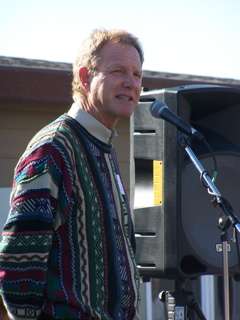
100_5259.jpgSupervisor Kinsey (left) responded: The issue of windy areas is one I researched we researched when we were considering the County ordinance five years ago. The BAAQMD and others provided us with clear information that pollution created in Marin ends up impacting the East Bay and the Central Valley. I believe that if all counties and cities act together we can substantially reduce air pollution in the region, as well as addressing the immediate concern of areas which have inversion layers.

DVM: Under a four-year-old county ordinance, which you sponsored, homeowners in West Marin and other unincorporated parts of the county, by July 1 of this year have to replace their old woodstoves and fireplaces with EPA-approved units. Do you feel that should be sufficient to meet the Bay Area Air Quality Management District’s goals?

Supervisor Kinsey: I believe that our ordinance has taken appropriate steps to meet the BAAQMD’s goals related to air quality impacts related to wood smoke. The county ordinance provided a five-year voluntary program, and the board provided a rebate program to financially help people who need to upgrade their wood stoves. Given that those who have only a wood-burning source for their heat are exempt from the BAAQMD ban during “Spare-the-Air” events, as long as they are using dry material for their fuel, I believe that our ordinance is consistent and adequate to meet BAAQMD goals.

DVM: The main alternative to wood for heating in West Marin is propane, and it is derived from other petroleum products during oil or natural-gas processing. With the cost of natural gas expected to rise by 20 percent this year and the cost of oil already high and rising, wouldn’t this seem to be a bad time to be forcing people to burn more propane?

100_6971.jpgSupervisor Kinsey: The proposed regulations do not force West Marin residents to switch to propane. Wood burning remains a viable option, although some homeowners will have to pay the price of converting to an EPA-certified stove. I agree that petroleum-based fuels will continue to become more expensive and have their own environmental consequences, even if their impacts occur remotely. Our board is strongly advocating the development of additional renewable energy capacity in our county, and I am very pleased with the operation and cost savings that I am realizing from my own photo-voltaic installation.

DVM: Do you think the Air Quality Management District recognizes differences in rural, suburban, and urban wood heating? Should it?

Supervisor Kinsey: The BAAQMD considers air quality to be a regional responsibility, and I doubt that they differentiate between remote, low-density communities and larger, more urban ones, because they recognize the interconnectedness of the atmosphere. Having said that, I also doubt that their enforcement activities will focus on the lower-density areas where problems and complaints will be fewer. I also think that by exempting wood-burning smoke when it is the sole source of heating for a residence is an acknowledgement that there are differences in the character of communities.

I believe that we all live in the same fragile bubble, and that we are equally responsible for the quality of our air, whether we live in West Marin or an urban area. At the time that the Marin County ordinance was enacted, many local residents agreed with me, and some cited their own health problems related to smoke. That said, I also believe that when regulations are implemented the cost must be taken into account, and I applaud the Air District for proposing a rebate program, similar to Marin County’s rebate program, which will help people make the transition.

DVM: Should the county ask the Air Management District to make exceptions for EPA-approved woodstoves? For homes in sparsely populated areas? For woodstoves not in the vicinity of bad-air-day problems?

Supervisor Kinsey: For the reason mentioned above, I do not think that the Air Management District needs to make additional exceptions for low-density communities.

100_0940_115179878_1_2.jpgDVM: In general, what should the County of Marin’s role be in all this? What position is the board taking?

Supervisor Kinsey: Marin County seeks to be a leader in reducing health risks and climate change consequences related to pollution of our air. We were in the lead on requiring improvements to wood-burning appliances, without taking an arbitrary position of banning all woodstoves. We also have tried to ease the financial impact of change for individuals. I expect that our board will endorse the proposed regulations, but we will not take an active role in enforcing those regulations.

Our objective has been, and will remain in a supportive role, to help homeowners convert their stoves and to meet the county code. In the upcoming county budget process, I will be requesting that my fellow supervisors support renewed funding for the county rebate program to help homeowners with the costs associated with conversion.

A couple of Supervisor Kinsey’s answers make me suspicious. He talks about “pollution from Marin” having an impact in the East Bay and Central Valley. That’s “Marin,” not “West Marin,” the territory that makes up most of his district and which is on the other side of the coast range from the East Bay. In fact, he acknowledges, “I doubt that the [Air Management District officials] differentiate between remote, low-density communities and larger, more-urban ones.”

I’m also suspicious when a politician says, “Don’t worry about this law I’m backing. In your case, it’ll never be enforced.” Either you have a bad law or a prediction you can’t count on. Supposedly, as long as you don’t have other ways to heat your house, you’ll be able to fire up EPA-approved woodstoves on “Spare the Air Days.” Of course, you won’t be able to do so if you have propane available — even if you can’t afford to use it.

I like Supervisor Kinsey, but his citing the “interconnectedness of the atmosphere” and our all living “in the same fragile bubble” as arguments for restricting this coast’s woodstoves strikes me as a wondrous rhetorical leap — not empirical science.

Although the official comment period on the Air District’s proposed woodstove restrictions expired back on Dec. 10 (well before most of the public was aware of them), readers can still email suggestions to district staff or directors at sparetheair@baaqmd.gov.


Half the frontier towns in Northern California contain buildings that, if you believe local lore, were once bordellos. I can’t count the number of times someone in Point Reyes Station has assured me that either the Grandi or the Western Saloon used to be a whorehouse.

I once asked the late Lefty Arndt, who had lived in Point Reyes Station since the 1920s, if there really ever was a brothel in town.

He told me there once had been one, but it was neither the Grandi nor the Western. Rather, it was a small building that once was on the main street and became a brothel after being moved to Mesa Road, where it is now a private residence. For the sake of the residents, I won’t identify it. Arndt, who had not been a patron, said it was his belief that only two women worked there, and noted that the town didn’t pay too much attention to it.

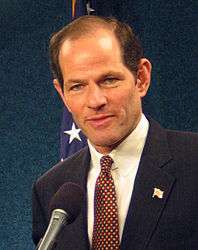
198px-eliot_spitzer.jpgIn contrast, it would be hard to imagine higher-profile prostitution than the Emperors Club VIP where New York Gov. Eliot Spitzer (right) was a patron.

As the FBI revealed Monday, the governor had been frequenting the call-girl operation before it was raided a few weeks ago. From listening to folks around Point Reyes Station, however, I get the impression that people here are less interested in Spitzer’s high-priced call girls than his hypocrisy.

From 1998 to 2006, Spitzer was New York’s attorney general, and during that time he “prosecuted at least two prostitution rings as head of the state’s organized-crime taskforce,” The San Francisco Chronicle reported. “In one such case in 2004, Spitzer spoke with revulsion and anger after announcing the arrest of 16 people for operating a high-end prostitution ring out of Staten Island.”

Government hypocrisy toward prostitution, however, is traditional and may never have been more bizarre than at Mustang Ranch, once the best-known brothel in the United States.

An oasis of mobilehomes amid 440 acres of sand and sagebrush located 10 miles east of Reno (and in a different county), the ranch offered security, cleanliness, and mirrors on the ceiling. The women who worked there were required to use condoms and get weekly medical checkups.

Although Nevada law permits bordellos in most counties, it insists that their operators — bizarrely enough — be of good moral character. But what in other people would be considered an expression of good character – such as civic-mindedness – can in the case of a brothel owner be criticized as grasping for legitimacy. In the 1970s, Mustang Ranch owner Joe Conforte found himself in that situation.

While he could easily have been considered a scoundrel merely because of the way he made his money, Conforte instead came under attack primarily because he was considered too involved in civic affairs for a brothel owner. Leading the attack was the local press, and in 1977, Warren Lerude, Foster Church, and Norman Cardoza of The Reno Evening News and Nevada State Journal shared a Pulitzer Prize in Editorial Writing for denouncing Conforte’s influence in the Reno area.

100_6952_2.jpgReading about all this in California, I was surprised by Conforte’s rise to national prominence, especially when he was written up – complete with an Annie Leibovitz photo (at right is a toned detail from it) – in Rolling Stone magazine. Equally surprising was his subsequent fall.

In 1990, a federal court took control of Mustang Ranch after Conforte missed a $75,000 monthly tax bill. When word of the takeover reached the bordello, “prostitutes panicked and fled, customers were thrown out, and the doors were slammed,” The Chronicle reported at the time.

Given government’s usual repression of prostitution, one might have expected officials to be pleased that the brothel had closed. Not so. When a federal bankruptcy judge turned Mustang Ranch over to US Bankruptcy trustee Jeri Coppa, she considered it her top priority to immediately get the bordello back in business.

As her office saw it, the closure could not have come at a worse time. The Reno Air Races were to be held that Saturday, and normally this would be he busiest weekend of the year at Mustang Ranch. The whorehouse could not afford to lose so many potential customers if it was to pay off the IRS and its secured creditors.

I’m trying to get the girls back, straighten out the business licenses, insurance, and work permits, blood tests – and get the place back open,” Ms. Coppa, the federal bankruptcy trustee, told Chronicle reporter Kevin Leary three days before the Air Races. “It’s a new experience for me. I’ve never run a whorehouse before. But about 20 girls have signed up so far, and the bar manager and floor maids are anxious to get back to work.”

In any case, the federal government with unusual alacrity managed to reopen Mustang Ranch just in time for the Air Races. Later the ranch was sold at auction, where it was purchased by an associate of Conforte.

Notwithstanding prostitution’s being legal throughout much of the state, even in Nevada it carries a stigma. Onetime Harper’s editor Sallie Tisdale in Talk Dirty to Me: An Intimate Philosophy of Sex (Doubleday, 1994) notes that prostitutes in Nevada cannot live and work in the same town, go into casinos or bars, or be in the company of men in public places. Still for women willing to put up with the stigma, working in a brothel at least pays fairly well and is relatively safe.

The same is not true for their sisters who walk big-city streets. My former employer, the old San Francisco Examiner, in 1995 reported not only that rape, robbery and beatings are a daily risk for the city’s streetwalkers but also that few of their attackers are ever prosecuted. Hitch-hookers, who ply their trade in strangers’ cars, face particular danger.

Fearing the AIDS epidemic, streetwalkers nowadays generally try to get their customers to use condoms, but hypocritical laws actually discourage this. If a woman is found to be carrying a supply of condoms, many courts in both the Great Britain and the United States allow that fact to be used as evidence against her should she be charged with prostitution.

There was a time back in the late 1970s when people lived upstairs in Point Reyes Station’s derelict Grandi Building although the county considered the place unsafe and eventually kicked everybody out. A couple of years before that happened, however, sheriff’s deputies began to notice that each evening, one of the Grandi’s female residents kept going across the street into the Western Saloon, picking up men, and then taking them back to her room. In the course of a night, she might do this two or three times.

Suspecting she was soliciting, officers began keeping an eye on her, only to discover she was not a prostitute, just very promiscuous.

Not exactly the Emperors Club VIP where Gov. Spitzer (who is scheduled to resign Monday) spent up to $80,000.

A San Francisco Chronicle headline and an Economist ad published in recent days provide worrisome evidence that a significant minority of Americans aren’t bothered by their government’s use of torture. In fact, more than a few Americans get off on it.

175px-raustadt_photo_of_mccain-1.jpg“McCain Urges Bush to Veto Waterboard Bill; Senator Is Against Torture But Doesn’t Want CIA Limited,” noted a Chronicle headline on Feb. 21. The accompanying AP story explained:

“Arizona Sen. John McCain [right] said President Bush should veto a measure that would bar the CIA from using waterboarding and other harsh interrogation methods on terrorist suspects. McCain, the presumptive Republican nominee, voted against the bill, which would restrict the CIA to using only the 19 interrogation techniques listed in the Army field manual.

“His vote was controversial because the manual prohibits waterboarding — a simulated drowning technique that McCain also opposes — yet McCain doesn’t want the CIA bound by the manual and its prohibitions.”

ag19.jpgAs McCain sees it, when our government is torturing someone, the torturer needs to be on the CIA payroll and not the Defense Department’s — a distinction that may be lost on victims such as the Abu Graib prisoner at left.

There are, of course, people who defend the CIA’s use of torture. Some make lawyerly arguments for it, but an uncomfortable number are gleefully sadistic in its defense. A spot check of online debates nationwide found a number of comments along the lines of these sent to The Anchorage Daily News:

capt10.jpg“We have a new breed of extremely violent men with knowledge of extremely deadly plans. Do what you need to do to make them bare their souls. If waterboarding is too harsh for you bunny huggers, do it how Poncho Villa did it? Tie them to a post, pull their pants down, and put a hungry calf in front of them. Problem solved.”

capt4_thumb.jpgOr: “Water boarding would be better if we used rats’ blood instead of water.”

Such remarks from more than a few members of the public raise the question: What kind of person does the CIA hire to do the torturing?

And how does our government find educated people willing to work for an agency known worldwide for its sadistic abuse of prisoners?

cia-recruitment-ad-001.jpg

Answer: The CIA recruits its spies with ads in The Economist, in other publications, on television, and on the website YouTube where it solicits both conventional spies and computer techies interested in electronic spying. The Economist ad above reads:

“Be part of a vital mission that’s larger than all of us. The CIA’s National Clandestine Service seeks qualified individuals to serve our country’s mission abroad. Our careers offer rewarding, fast-paced, and high-impact challenges in intelligence collection on issues of critical importance to US national security.”

ag25.jpgOf course as a practical matter, CIA employees must either be able to indulge in sadism that would turn the stomachs of most people — or at a minimum be comfortable working for an agency that indulges in such horrors.

On Saturday, March 8, President Bush, as expected, followed Senator McCain’s advice and vetoed Congress’ attempt to bring the United States of America back into the civilized world.

These four photos of captives at Abu Graib being tortured by our government are from AntiWar.com. The fact that they are so horrible to look at demonstrates how much our government’s use of torture — whether pain, fear, or sexual degradation — offends most Americans’ sense of decency.

The Park Service’s hired hunters are assaulting not only wildlife but the value systems of West Marin residents as disparate as ranchers, deer hunters, animal-rights advocates, and merchants.

watching-over-the-heard3_1.jpgUntil now, the administration of Point Reyes National Seashore Supt. Don Neubacher has managed to avoid most of the criticism it deserves by repeatedly giving out misleading information regarding the need for the slaughter, how quickly it would proceed, and what would become of the venison.
Until the press found out, for example, many fallow deer were left where they dropped, slowly dying of gut wounds. Axis-deer carcasses were carted off in Waste Management dumpsters, one garbageman has reported.

Fallow-buck photo by Janine Warner, founder of DigitalFamily.com

Wildcare has organized an email petition drive to House Speaker Nancy Pelosi, Senator Dianne Feinstein, and Senator Barbara Boxer, calling for a moratorium. I urge readers of this blog to please take a few seconds to sign the petition by clicking here.

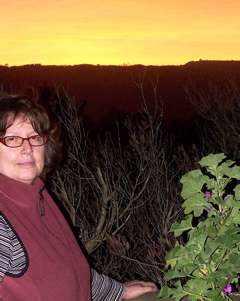
Among those offended by the park’s latest round of deer killing is Kathy Runnion of Nicasio (seen below). Many of us know Kathy from her job at the Point Reyes Station Post Office and as the head of Planned Feralhood. This weekend she wrote this message to the press:

I am devastated by the slaughter of the fallow and axis deer, and I’ve wanted to organize some kind of event that will allow the community a way to express our grief and horror.

I spoke with Ella Walker this week and was moved by her story. She lives in the heart of Olema and has spent time in the National Seashore confronting the White Buffalo hunters. Other Olema residents have seen helicopters terrorizing deer out of gulches into the open where they could be shot.

100_6910_1.jpgI sure would like to see the press embrace this story and stay on it until we can figure out how the Point Reyes National Seashore was allowed to eradicate axis and fallow deer when so many citizens are against it, including leading politicians. Park Superintendent Don Neubacher’s response to any query is that we all had our opportunity to comment.

Did anybody really listen to our input or respect it? I don’t think the Point Reyes National Seashore was ever very concerned about the community’s feelings.

The axis and fallow deer are a part of our community, whom we have loved seeing as we go about our daily business. I don’t see them anymore and I miss them.

Had the National Seashore not given the public so much misinformation, the public opposition up to now would have been far louder. We were told that the deer were not scheduled to be totally eliminated until 2020 and that there would be time for changing this approach to managing them during the intervening years. But already, the axis are virtually gone, as are a large percentage of the fallow deer.

Trinka Marris, Richard Kirshman, and many other Marin County people have worked hard to stop the killing, and I, like Susan Sasso said in her letter a few weeks ago, thought this group would be able to carry the fight for us. However, the slaughter has been so fast and furious, and there has been so much deception that more of us need to be heard.

dsc_0021_2.jpgNow that we are hearing the horrible truth about White Buffalo’s barbaric practices, it seems their contraception program is, in fact, merely one way they track herds to kill them.

A fallow doe, her head jangling with a tracking collar and tags that pierce both her ears. While all this is supposedly to keep track of which does have received contraception, the tracking collars are being used by hunters to find and kill the does’ herds. Photo by Ella Walker.

Many people in our community complain in private about the abuses they have witnessed but have remained silent out of fear of the park’s ability to retaliate against their business or the home and ranch they lease within the park.

People who know the reality of the culling and contraception program need to speak out and tell the public and our political leaders what has happened to the fallow and axis deer. Silence is complicity when a holocaust surrounds us.

Ella Walker has witnessed White Buffalo boss Anthony DeNicola, his clothes covered in blood, driving across the Vedanta Retreat, where there was not going to be any deer killing, the park had said. At the very least, White Buffalo appeared to be using the retreat as a staging area for killing deer nearby.

A lot of information is coming out now about White Buffalo’s disturbing tactics in communities all across the country. I wish we could have had an opportunity to learn something more about them, to be a part of the process that determines life and death in our homeland. I thought West Marin’s concerns were supposed to be significant.

Not only are we in West Marin part of the public that owns the park, we are a key part. The National Seashore is part of our community, and more than most Americans, we are aware of what is occurring within it. We in West Marin are its caretakers as much as the Park Service employees who get assigned here. And we demand a stop to the killing.

over-the-shoulder2.jpgI’ve lived here 35 years. This land and this community have been the love of my life, my healing place, my home. Now I wake every day with a pit in my stomach, knowing my animal friends have been terrorized and murdered. I feel sick.


The Point Reyes National Seashore needs to know a very heavy toll has been taken on this community. We wish the park would have shown us some respect and considered our feelings about these innocent, majestic animals.

Why the blitzkrieg after the park said it would proceed gradually? Like the deer, we as a community never had a chance. To the Point Reyes National Seashore I say, “Shame on you!

Kathy Runnion
Nicasio & Point Reyes Station, 662-2535

Photo of fallow does by Janine Warner, founder of DigitalFamily.com

610x.jpg

Fatimir Sejdiu, president of newly independent Kosovo. Its sovereignty has been recognized by the US, Great Britain, Germany, France, Italy, Denmark, and other countries — but not Serbia or Russia.

When Kosovo proclaimed its independence of Serbia two weeks ago (Feb. 17, 2008), news of the momentous occasion — and of rioting and an attack on the US embassy in Belgrade — was of more than passing interest to me.

Unlikely as it sounds, while the Kosovo War was underway in 1999, the little Point Reyes Light, which I then owned, chanced to have a correspondent in Kosovar refugee camps.

Equally unexpected, an 18-year-old refugee girl gave our correspondent, Adrienne Baumann, her personal journal. In horrifying detail, the journal of Albana Berisha from Pristina describes being caught in Serbia’s attempt to cleanse Kosovo of its ethnically Albanian majority. The journal goes on to record her family’s long and harrowing flight through the mountains to safety in the neighboring country of Albania.

Adrienne, a former Light reporter from a Chileno Valley family, had been working in Italy when the war broke out, and she volunteered to do relief work at miserable refugee camps in Albania. The Light printed her account and posted it online, along with Albana’s, prompting a flurry of angry emails to the paper from people in Serbia.

Light editor Tess Elliott has now told me she’s going to publish a recap of what was reported by the teenage Kosovar, Albana, as well as by West Marin’s witness to the war’s casualties, Adrienne. It’s bound to be a moving account.

Most Kosovars, like most Albanians, are Muslim, but culturally they are European rather than Middle Eastern. Most Serbs are Serbian Orthodox. A major reason why Serbs have long resisted Kosovar independence is that a number of their church’s hallowed places are in Kosovo.

In 1990, Serbian President Slobodan Milosevic revoked the autonomy of the provinces of Vojvodina and Kosovo, which resulted in an uprising that lasted from 1996 to 1999, pitting Serbian forces against guerrillas of the Kosovo Liberation Army. Supporting the KLA were a nowadays-unlikely pair of collaborators: Islamic mujahideen and NATO.

Initially, there were atrocities by both sides, and while the Serbian government claimed it was merely fighting “terrorists,” the UN reported that Serbs had driven 850,000 of Kosovo’s two million inhabitants from their homes. As you’ll recall, in March 1999, NATO forces led by the US intervened with a seven-week bombing campaign, stopped the ethnic cleansing, and turned Kosovo over to international peacekeepers.

Those peacekeepers have been there ever since. For the most part, Kosovo has been relatively calm since the war ended, and perhaps that very calmness is what led to one of the more-bizarre diplomatic rows of recent times.

Among the international peacekeepers were members of the Norwegian Army Telemark battalion, and they found themselves stuck killing time, perhaps making them cynical about their role in Kosovo.

100_6819.jpgAs it happened, back when NATO had intervened in 1999, a radio talk-show host in Seattle, Bob Rivers of KZOK, was unhappy with the US role as international policeman, especially because of its inconsistencies.

So Rivers took the music from the Beach Boys’ 1988 hit Kokomo, wrote new lyrics, and rerecorded the song as a political satire called Kosovo.

The parody caused much laughter in Seattle but after a year was mostly forgotten. In 2002, however, some Norwegian peacekeepers happened upon the parody. Seeing that the lyrics were apt for their own situation, the Norwegians (above) using a hand-held camera filmed themselves lip-synching to the song.

The Beach Boys’ song, as I’m sure you remember, began: “Aruba, Jamaica, ooo I wanna take ya/ Bermuda, Bahama come on, pretty mamma/ Key Largo, Montego — baby, why don’t we go?”

The song the Norwegians mouthed begins: “Croatia, Albania, somewhere near Romania/ It’s Euro and NATO — why the hell do we go?”

100_6814.jpgIn the Beach Boys’ song, the lines were: “Afternoon delight/ cocktails and moonlit nights/ That dreamy look in your eye/ Give me a tropical contact high/ Way down in Kokomo.”

Dressed in camouflage, and carrying their combat rifles, the Norwegians on patrol mouth, “Protecting human rights/ Air strikes and firefights/ And we’ll be dropping our bombs/ Wherever Serbian bad guys go/ Just up from Kosovo.” (Presumably in Serbia.)

The Norwegians dance atop armored vehicles and a bombed-out bus. From the bus, they mouth the lines: “Every time we go/ To little places like Kosovo/ We never really know/ What happens after we go/ Tough luck for Kosovo.”

100_6817_11.jpgIn 2005, three years after the clip was filmed, it ended up on the website You Tube; Serbian television quickly found and aired it; television stations throughout the Balkans then rebroadcast the clip; and all hell broke loose.

Furious, the Serbian government claimed the clip proved what Serbia had been saying, that the peacekeepers were hostile to the country. Surprisingly, the Serbs also complained about the indecency of the soldiers sometimes being shown bare-chested.

Norway’s ambassador to Serbia immediately apologized, saying, “I really hope this incident will not disturb the lasting and deep friendly relations between our countries.” Luckily for them, the Norwegian peacekeepers had by then completed their tour of duty and were no longer in the military, so they were not disciplined.

Here’s a link to the video. I should warn you, however, that while the bulk of the video is humorous, its ending is grim although not gory.

100_6827.jpgThe song ends: “Somalia, Grenada,/ Or rescuing Kuwait-a/ We screwed you, Rwanda/ Wish we coulda helped ya/ Iraqi embargo/ How it ends we don’t know…” At this point, the soldier singing gets hit by a truck for the final irony.

There once was a country called Yugoslavia.

At the end of World War I while the victors were dismantling the old Austro-Hungarian Empire, they created Yugoslavia by cramming more than 20 ethnic groups into one ungainly nation rife with internal rivalries.

From 1945 until his death in 1980, Communist Party boss Marshal Tito — popular for having led Yugoslav resistance to the Nazis — was able to hold Yugoslavia together. But less than a decade after his death, the Soviet Union dissolved, and soon afterward, Yugoslavia did too. (Although Yugoslavia had been communist, it had not been part of the Soviet bloc.)

The onetime Yugoslav republics of Croatia and Slovenia declared their independence in 1991, Bosnia a year later. Macedonia declared its independence in 1991, but the UN didn’t recognize it as a sovereign nation until 1993. Montenegro declared its independence in 2006. Kosovo two weeks ago became the sixth region to secede, leaving Serbia as the only region still wearing the mantle of the old Republic of Yugoslavia.

North Marin Water District manager Chris DeGabriele this afternoon announced, “Cleanup of the sewer spill which occurred Monday, Feb. 18, in the Oceana Marin subdivision [of Dillon Beach] has been completed.

“Sewage debris deposited on the steep hillside where the sewer spill occurred has been removed. Staw wattles, jute netting, and native grass seeding have been applied to the affected area to help prevent erosion and limit sediment from entering the drainage swale and storm drain that flows to the ocean.” The swale is downhill from where the sewer pipe broke, apparently because tree roots damaged a joint.

The spill was relatively small; initial estimates were that it totaled something over 250 gallons, some of which reached the ocean and some of which ended up in the swale and on the hillside.

logo1.gifA Dillon Beach resident discovered the spill Monday afternoon and notified North Marin, which in turn notified county, regional, and state regulatory agencies. NMWD repairmen, along with a truck from Roto Rooter, were dispatched to Dillon Beach, which took them through the town of Tomales. As it happened, the Tour of California bicycle race stopped traffic in and out of Tomales for more than an hour that afternoon, but DeGabriele assured me that the bicyclists were long gone before his crew needed to get through town.

“Results of tests completed by the County of Marin from the ocean-water samples taken on Tuesday, Feb. 19, show bacteria levels are much lower than the acceptable [maximum] standard, indicating the ocean water is safe for body-contact recreation,” DeGabriele reported. As a result, “warning signs and precautionary tape keeping people away from the area have been removed.

Today the inside of the affected pipeline is being remotely inspected with a television camera to determine if areas other than that which failed on Monday afternoon may need repair. NMWD’s contractor will begin repair of the pipeline early next week.

“NMWD provides sewer service to 222 homes in the Oceana Marin area,” the North Marin manager noted, and “17 of these homes are connected to the sewer-collection pipeline which failed.

“The six-inch-diameter, ductile-iron pipeline was installed in the mid-1970s in open terrain down a steep hillside, extending from Kona Lane to Kailua Way.”

It is easy to underestimate the power of coincidence; nonetheless, I am surprised by a sudden rekindling of interest in The Point Reyes Light and West Marin Citizen as representing two poles of community journalism.

100_6809.jpgA German journalist, Stephan Russ-Mohl, showed up at my cabin yesterday to interview me about the changes at The Light since I sold it two years ago. In 1992 while teaching Journalism at the Free University of Berlin, Russ-Mohl authored Zeitungsumbruch: Wie sich Amerikas Press revolutioniert, which devoted a chapter to The Light. Unfortunately, I can’t read it.

All I can tell you is that is that the chapter begins with a (presumably translated) comment by American journalist Robert Giles: “Die amerikanische Provinzpresse steht heute nicht mehr in der Tradition eins couragierten Journalismus, eines Journalismus, der Anstoß nimmt.”

Apparently the passage complains about “die amerikanische Provinzpresse” losing the courage to become indignant.

However, Russ-Mohl goes on to say, “Ein Beispiel jedenfalls, daß es mutigen Journalismus auch an den Grass roots noch gibt, liefert ein Winzling unter den amerikanischen Zeitungen, der ein Strückweit nördlich von San Francisco erscheint: The Point Reyes Light.” I surmise that 15 years ago the author could see some counter-examples, including The Light, but as they say in Germany, “Ich verstehe nur Bahnhof.” *

Another book that devotes a chapter to The Light is Pulitzer’s Gold, which has just been published by the University of Missouri Press and is selling remarkably well.

Engagingly written by Roy Harris (senior editor at CFO magazine), Pulitzer’s Gold looks in detail at what the 12 most-recent winners did to earn the Pulitzer Prize for Public Service, which Joseph Pulitzer considered his top prize.

100_6804.jpgThe book also details the work of several other of the 92 winners (through 2006) of the Public Service gold medal, including The Light. These others were chosen, Harris writes, “because they are not only terrific stories but also fine illustrations of how Pulitzer Prize-winning work has evolved over the years.”

The Light won its gold medal in 1979 for an exposé of violence and other wrongdoing by the Synanon cult.

Pulitzer’s Gold notes that Robert Plotkin now owns The Light and concludes its chapter on the newspaper: “Though new to Marin, he has grand ideas. ‘This is going to be the Paris of the twenties. This is going to be the Beats of San Francisco in the fifties.’ Talent will gravitate to The Light, he says, because it is still known, even back East, as the little California paper that won the Pulitzer Prize.

“Mitchell, though, will never forget how strange it felt to have been so small and to have won so big: ‘It’s like being out playing touch football and making a good catch, and somebody says, “You could play for the 49ers with a catch like that.”’”

Meanwhile Point Reyes Station journalist Jonathan Rowe’s article, The Language of Strangers, in the January-February Columbia Journalism Review continues to generate discussion. The article describes the new incarnation of The Point Reyes Light and the advent of The West Marin Citizen.

100_6510.jpgIn discussing The Light’s editorial approach under its new publisher, Rowe (at right) wrote, “First, there was the braggadocio and self-dramatization. Most people in his situation would lay low for a bit, speak with everyone and get a feel for the place. Instead, Plotkin came out talking. We read that he was going to be the ‘Che Guevara of literary revolutionary journalism.’ The Light would become ‘the New Yorker of the West’ …. [However] he soon showed a gift for the irritating gesture and off-key note.”

A flap erupted when Peter Byrne, a columnist for an alternative newspaper, The North Bay Bohemian, posted an angry comment on CJR’s website where Rowe’s magazine story was online.

Byrne, who called Rowe’s article “terribly one-sided and unfair,” referred CJR readers to a column he himself had written. In the Bohemian column, Byrne wrote, “It seems evident to me that Plotkin breathes journalism day and night, and has responded to the expressed desires of his provincial readers,” adding that “The Light under the direction of Mitchell … was staler than day-old toast.”

Explaining his interest in The Light, Byrne acknowledged that “last year, Plotkin and I talked about working together, but it did not pan out since I require a living wage.”

Several CJR readers, including Rowe himself, have by now posted responses. “Byrne acknowledges that Plotkin is ‘narcissistic,’ which is his word not mine,” Rowe wrote. “But he blames this trait on us dim-witted locals, who lack a capacity to appreciate good journalism. ‘Townies waving pitchforks and whale-oil lanterns,’ he calls us. Now that’s reporting. It’s an interesting psychological theory too.”

100_6805.jpgA CJR reader named Monica Lee replied to Byrne: “Petah, Petah, Petah — sit yourself down, read much, study hard, and maybe someday you will write a piece as brilliantly spot-on about small-town newspapers and what they mean to a community as Jonathan Rowe has done.”



Another reader, Steve Bjerklie of Point Reyes Station, responded that publisher Plotkin is “a wealthy dilettante with a journalism degree playing out a Walter Mitty fantasy at The Light, and the West Marin community suffered for it until the advent of the rival Citizen.”

Michael Mery of Point Reyes Station wrote that Byrne’s comment was “a typical journalistic cheapshot — little information coupled with limited experience.”

I subsequently saw Mery in Toby’s Feed Barn and remarked on his response to Byrne’s commentary.

It was drive-by journalism,” Mery said with a laugh. Although Mery came up with the clever turn-of-phrase on his own, he’s not the first to use it in describing a smear written by an out-of-town journalist who shows up only briefly. In fact, there is a book with that title by an author named Rowse (not to be confused with Rowe).

The Point Reyes Light controversy shows no sign of letting up any time soon, which no doubt explains why Sausalito-based Marin Magazine has now arranged to publish a lengthy excerpt from Rowe’s article.

* German slang that translated literally means: “All I understand is train station,” which is comparable to saying, “It’s Greek to me.” How do I know this and not know German? A little Vögelchen told me.

A pipeline apparently broken by tree roots caused a small sewage spill into the ocean at Dillon Beach Monday, North Marin Water District manager Chris DeGabriel announced today.

“It’s estimated that over 250 gallons of sewage surfaced from a broken pipeline on a steep hillside in the vicinity of Kailua Way,” he said, adding that the leak “was likely caused by tree roots damaging a pipe joint.”

100_6654_11.jpg
Seen from Elephant Rock, Dillon Beach looks tranquil with Lawson’s Landing resort and the mouth of Tomales Bay in the distance. In the town’s Oceana Marin subdivision, however, a sewage spill caused a bit of a commotion yesterday.

Kailua Way is within the Oceana Marin subdivision, where North Marin operates the sewer system. “District crews responded, and Roto Rooter Sewer Service was dispatched to the area,” DeGabriele reported. “The spill was contained and initial pipe repair made within four hours of the district’s response.

“During that time, raw sewage flowed over land and ultimately into a drainage swale and storm drain that flows to the ocean…. The affected drainage swale and beach has been taped off and signed to keep people away from the area.

“Water samples upstream and downstream from the spill are being tested, and the results will be made available as soon as possible. Cleanup of the sewage discharged onto the area has begun, and the district is pursuing permanent repair of the pipeline.”

DeGabriele said a Dillon Beach resident first alerted North Marin to the spill and that “Marin County Health Department, the North Coast Regional Water Quality Control Board, and California Department of Fish and Game were notified of the incident.”

North Marin’s quick notification of regulatory agencies contrasts with the Sewerage Agency of Southern Marin’s slowness to report two sewage spills totaling 5.2 million gallons into Richardson Bay, an arm of San Francisco Bay, on Jan. 25 and 31.

100_6793_1.jpg

A herd of up to nine blacktail deer have taken to spending their days on this hill, here joining the horses of Point Reyes Arabians for a late-afternoon snack.

100_6702.jpg

California’s Department of Fish and Game has estimated that well over half the roughly 560,000 deer in California are Columbian blacktails, the deer native to West Marin and the San Francisco Bay Area.

100_6693.jpg

Mutual friends. Two blacktail does licking each other’s coats.

For years many people believed (and many websites still say) that blacktails are a subspecies of mule deer, a species found from the Northwest to the deserts of the Southwest and as far east as the Dakotas. DNA tests, however, have now found mule deer to be a hybrid of female whitetail deer and blacktail bucks. Or so says author Valerius Geist in Mule Deer Country.

mule_deer-238.jpgWhitetails first appeared on the East Coast about 3.5 million years ago, as this blog previously noted. DNA evidence suggests they spread south and then west, arriving in California about 1.5 million years ago.

In moving up the coast, whitetails evolved into blacktails, which resemble them in appearance and temperament. Blacktails eventually extended their range eastward, meeting up with more whitetails coming from the east. Apparently the blacktail bucks were able to horn in on the harems of their parent species. The result: mule deer.

Mule deer as seen on the website of Wind Cave National Park in the Black Hills. The deer are so named because of their long ears.

And for an amazing look at a whitetail deer, check this YouTube clip of one running into the path of a motorcycle on a mountain highway — but avoiding a collision by jumping over the biker as he ducks.

« Previous PageNext Page »