Wed 27 Jun 2007
Ship’s flare or meteor?
Posted by dave under Point Reyes Station, Marin County, General News, History
[4] Comments
Was it a ship’s flare or a meteor? It appeared at almost exactly 11 p.m. Monday while I was standing in my living room talking with Nina Howard of Inverness. Suddenly a bright-white light came into view out my window, traveling west to east in the moonlit sky.
“Turn around quick!” I said to Nina, who did and was able to see the end of the light’s long arc as it disappeared behind Inverness Ridge roughly three miles south of my cabin. The light appeared to have been high above the ridge with a long trajectory.
I called the Sheriff’s Office and reported that two of us had just witnessed what appeared to be either a ship’s flare or a meteor. About 10 minutes after I hung up, I got a call from the Coast Guard in Bodega Bay. An officer asked several questions and then requested I stick around the cabin for a followup call.
After a few more minutes went by, I received a call from a woman who identified herself as a member of the Coast Guard in San Francisco. She was clearly well versed in making sense out of what civilians report. Given that the light was visible longer than a typical shooting star, she felt there was a reasonable chance it was a ship’s flare.
She told me to make a fist and hold my arm straight out with my little finger even with the top of Inverness Ridge. How many knuckles above the ridge was the light when I first saw it? “Four or more,” I told her. If I were looking at a clock in the same direction, at what number did the light enter my field of vision? “Eleven,” I said. What is the elevation of my house? “Roughly 200 feet.” (Inverness Ridge, on the other hand, is 1,407 feet at its highest point.)
After a few more questions, she said I’d provided enough information that she could organize a search, adding that the Coast Guard appreciated my reporting what I’d seen.
Tuesday morning I checked with the Sheriff’s Office and the Coast Guard, but neither reported finding any boat in distress, so I called the Morrison Planetarium in San Francisco. Bing Quok, the assistant director, said there was a “possibility” that what I saw was an “early meteor” in an annual meteor shower known as the June Boötids.
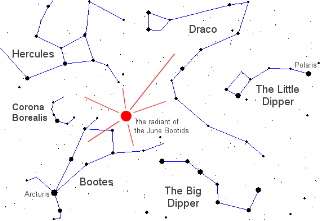
The Boötids are normally seen from June 26 until July 2 and will peak this Wednesday night, June 27, an hour and a half before sunset. The typical shower lasts for several hours, appearing to radiate out from the constellation Boötes (hence the name), which is near the end of the handle of the Big Dipper. Boötes will be directly overhead at the peak of the shower.
This map of the constellations comes from the website of Spaceweather PHONE, an unusual enterprise that for $4.95 a month will give you a phone call every time meteor showers, Northern Lights, space-station flybys, planets in alignment etc. can be seen from where you live.
The June Boötids are debris from the comet 7P/Pons-Winnecke, which is named after Jean Louis Pons, a French astronomer who in 1819 first recorded a sighting, and a German astronomer named Friedrich August Theodor Winnecke, who rediscovered the comet in 1858.
The comet normally produces a weak meteor shower, and nothing at all was seen in 1880, 1904, and 1957. However, in 1916, 1921, 1927, and 1998, it produced dramatic showers. In 1998, some 100 meteors an hour streamed from the comet for seven hours straight.
By meteor standards, the Boötids travel slowly, only 40,000 miles per hour (11 miles per second). The light I saw was visible through my window for two to three seconds; if it was indeed a Boötid, I first saw the meteor about three seconds after it entered the earth’s atmosphere, the edge of which is 62 miles above us.
Astronomers, by the way, believe that although meteors primarily come from asteroids (AKA minor planets), they also from comets, the moon, and Mars. Any solid body coming from outer space is called a meteoroid — if it’s at least as large as a speck of dust but is smaller that an asteroid. If we can see it, we call it a meteor, and when a meteor makes it to earth at least partially intact, we call it a meteorite. The meteorites that come from Mars and the moon (more than 20 of each have been found) probably were thrown into outer space when an asteroid slammed into those heavenly bodies.
Although a huge amount of meteoroids (a total of more than 100 tons) supposedly enter our atmosphere daily, most are well under an inch in diameter. And most are traveling so fast (up to 45 miles per second) that they slow down and burn up as a result of atmospheric friction.
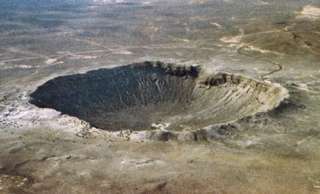 On rare occasions, however, a giant hunk of space debris is too heavy to be slowed by air friction although it may ultimately disintegrate — such as the meteor that 49,000 years ago came down near present-day Winslow, Arizona, blasting out this huge crater almost three quarters of a mile in diameter. (USGS photo)
In 1908, a meteoroid believed to have been a 200-foot-wide bundle of stones slammed down on a remote region of Siberia north of Mongolia. Although it disintegrated before hitting the ground, its airburst leveled trees in a 30-mile-wide area and was heard all the way to London.
Scientists have, in fact, calculated how much damage can be expected from different sized meteors. A meteor less than 165 feet in diameter will usually burn up in the upper atmosphere; stone meteors 245 feet in diameter have the impact of the Siberian meteor while iron meteors that big create craters the size of Winslow, Arizona’s, but meteors this size come along only once in a thousand years. Every 5,000 years on average, a meteor 525 feet in diameter devastates an area the size New York City while every 63,000 or so years, meteors roughly 3,000 feet in diameter show up and lay waste to areas the size of Virginia. And every 250,000 years a mile-wide meteor strikes the earth and wipes out an area the size of California or France. An asteroid capable of killing off the dinosaurs drops in every 100 million years.
Fortunately, the Boötids won’t do anything like that; nonetheless, it’s probably worth watching the sky as soon as it gets dark the next few nights — even if the light Nina and I saw Monday was actually a ship’s flare. However, Café Reyes owner Robert Harvel told me Tuesday night he had seen a similar light race across the sky about 10 p.m. Monday, making me now suspect that both lights were part of the same meteor shower.
 Andrew’s specialty was selling newspaper classified advertising to automobile dealerships, which he did almost continually for more than 30 years.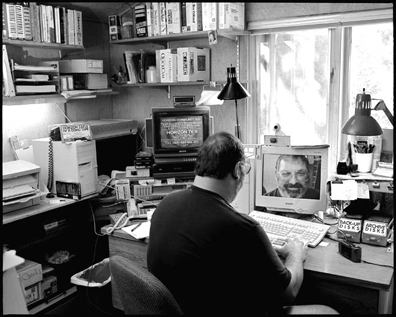


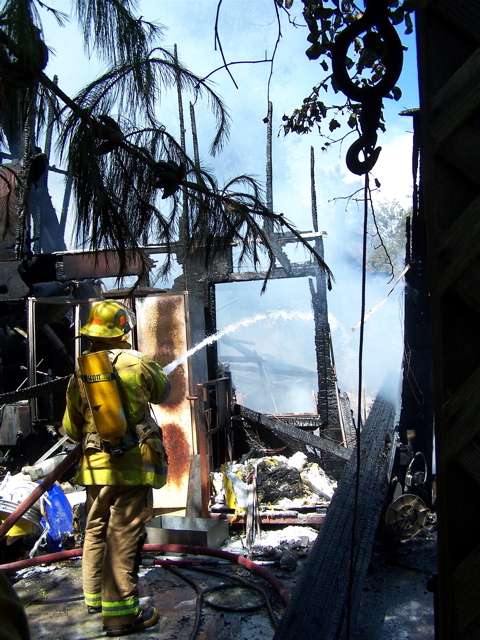
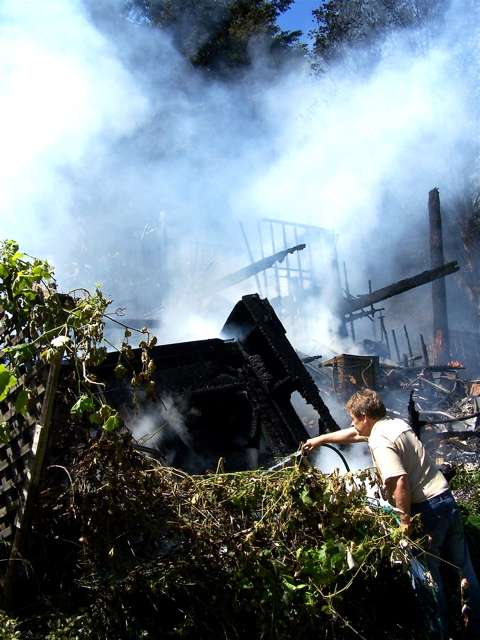
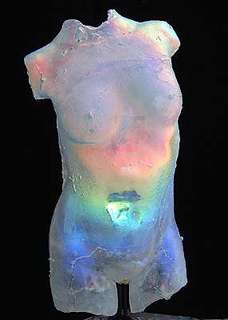 The studio was being used for sculpting and had previously been used for blowing glass, but none of the glass furnaces had been turned on in a year and a half, Slack said. The artist explained he had developed a bad back and could no longer handle the heavy lifting glass blowing requires.
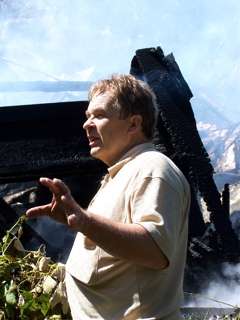 Slack (at right) said he immediately called the 911 emergency number but was kept on hold for six minutes.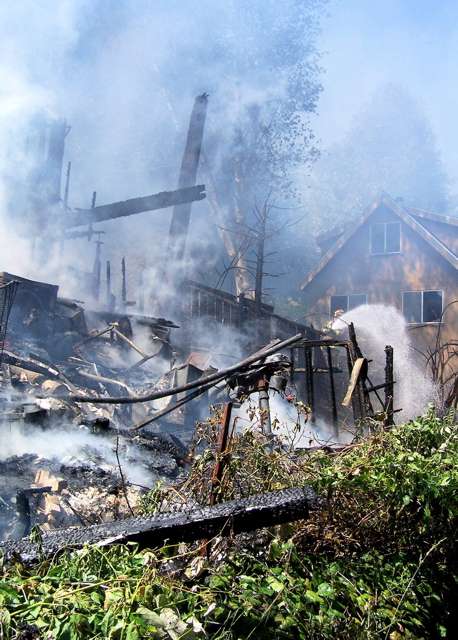
 Although the Jolley house (above) did not catch fire, heat from the blaze blew out windows facing the studio.






 Few Point Reyes Light reporters have received as many awards as Ivan Gale (upper left) of Chileno Valley, winning five state and national journalism awards in 2004 alone. The Light’s new owner, Robert Plotkin, on May 3 announced he will no longer display the awards won over the years by Gale and other Light staff. Gale left The Light to earn two master’s degrees from the Graduate School of Journalism at Columbia University. He is now a business writer for the Gulf News in Dubai, the rapidly growing financial and tourist center in the United Arab Emirates. Here he attends a press conference where Shaikh Ahmed bin Saeed al Maktoum, the uncle of the ruler of Dubai, talks about Emirates airline’s annual results.
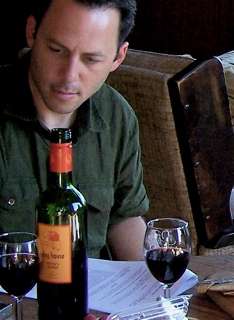 Eighteen months have now past, and West Marin residents have repeatedly let Plotkin (at right) know he is not providing the community newspaper they need and expect. How much longer The Light can survive in its present form is now a topic of much speculation around the community.
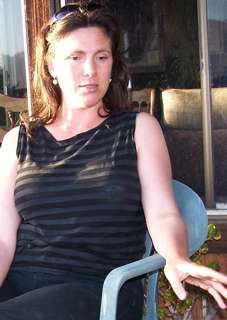 • Three weeks ago former Light publisher Michael Gahagan, who sold the paper to me in 1975, described one of Plotkin’s self-promotions as “meglomaniacal,” adding: “It saddens me that [Plotkin has] so mistakenly misunderstood, dishonored, and continue[s] to defile a community legacy.”
 Former Light editor Jim Kravets of Fairfax (left) will edit the weekly. Former Light advertising representative Sandy Duveen of Woodacre will sell advertisng.
 Also planning to work for The Pilot are: Missy Patterson of Point Reyes Station, who for 25 years has handled the front desk at The Light; former Light historian Dewey Livingston of Inverness, who used to contribute West Marin’s Past; feature writer Ellen Shehadeh of Inverness, who had been a frequent contributor to The Light; obituary writer Larken Bradley of San Rafael, who had won a variety of state and national journalism awards while at The Light; and Charlie Morgan of Inverness Park, who covers sports events for KWMR, will be the sports writer.
 Tomales cartoonist Kathryn LeMieux drew an enthusiastic crowd to Bodega Landmark Gallery in the town of Bodega Saturday when she opened a two-week exhibit of her surrealistic and often-whimsical oil paintings.

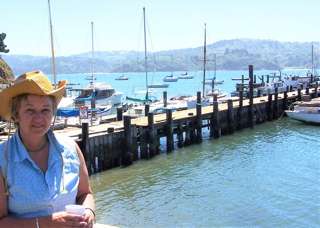 Kathryn, along with five other women cartoonists, also draws the nationally syndicated cartoon
 “The move sparked rioting and looting by several thousand protesters from large population of ethnic Russians, who tend to see the statue as a cherished memorial to a wartime sacrifice. Estonians mostly see it rather as a symbol of a hated foreign occupation.”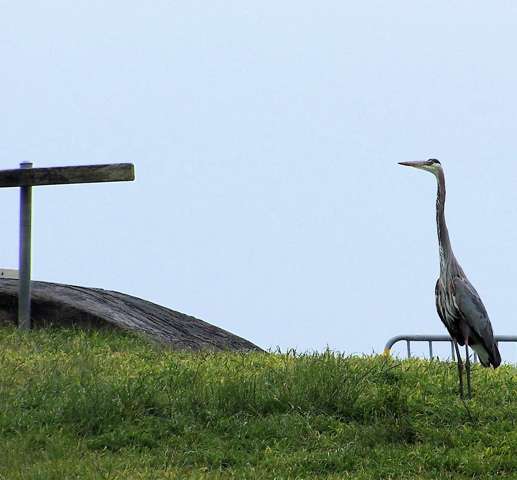


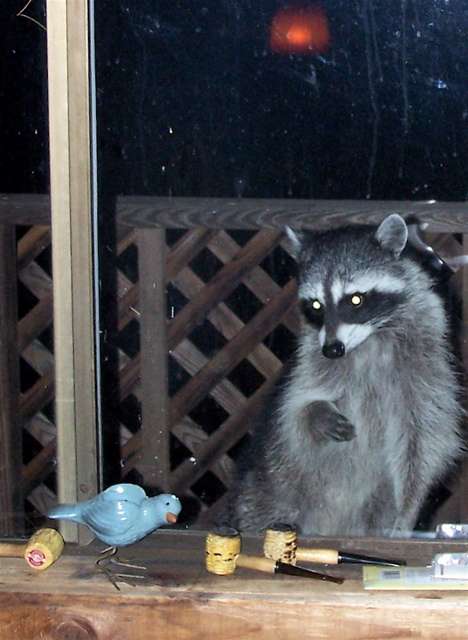
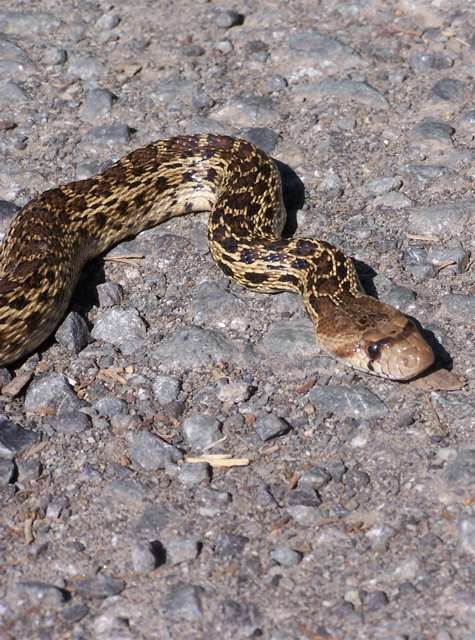
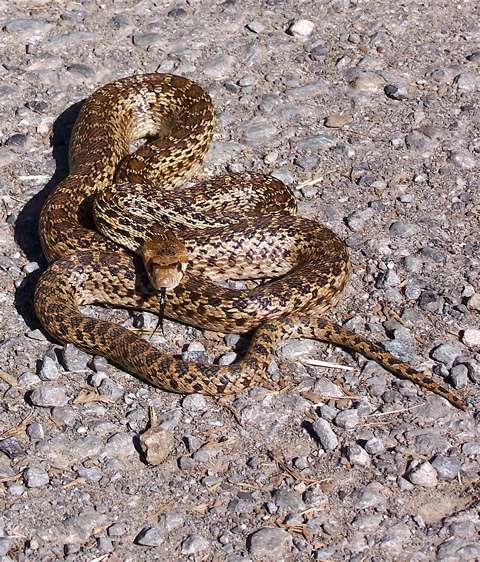
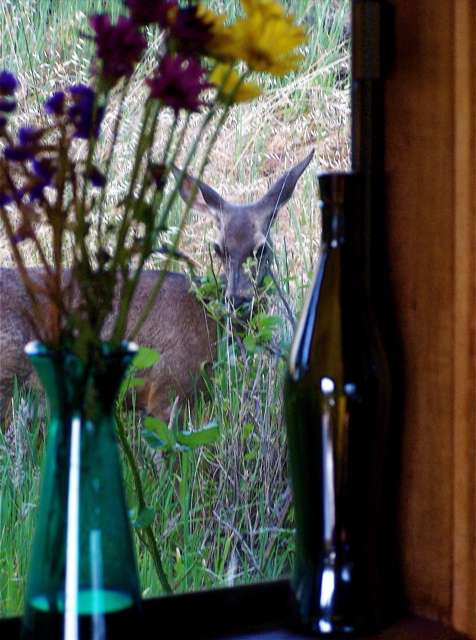
 Also like us humans, much of the animal world in West Marin was sweltering in this week’s “heat wave.”
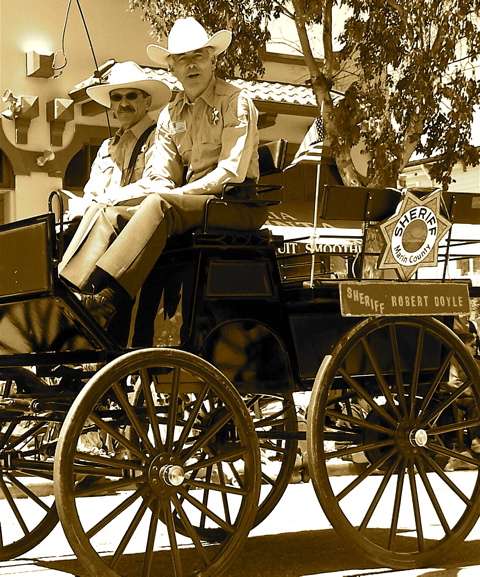

 So why did deputy Todt come to the door that morning? Supervisor Steve Kinsey told me that, according to the Sheriff’s Office, Lt. Scott Anderson, commander of the West Marin substation, sent Todt to my home in response to statements from Plotkin and “others.” I wouldn’t be surprised if that turned out to be someone associated with him. We’ll just have to wait and see.


