Mon 5 Nov 2007
West Marin’s ‘Mac Guru’ leaving town — a friend with a knack for surviving
Posted by dave under Point Reyes Station, General News, History
No Comments
Point Reyes Station resident Keith Mathews was an Air Force officer stationed in Tokyo back in 1962 when an official from the Philippine embassy invited him to visit Manila.
Keith, who had been a logistics officer ever since injuries from a fighter-jet crash made it unsafe for him to pilot a plane, was scheduled to travel to the Philippines anyhow, so he readily accepted the invitation. Not only did he get to travel first class on a commercial airline instead of taking a military flight, the Philippine government put him up in a fancy hotel and provided him with a Jeep, a driver, and two bodyguards.
But even two bodyguards proved to be not enough. While crossing the hills of Luzon to meet a ferry that would take him to another island, Keith’s Jeep was stopped by 15 highwaymen on horseback brandishing single-shot rifles.
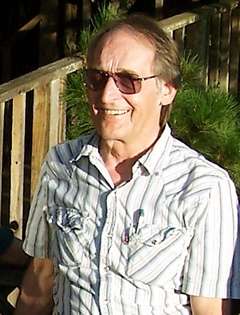 Keith told this story Saturday during a goodbye party that several of us threw for the “Mac Guru” of West Marin. The computer technician, who first moved to West Marin 25 years ago, will move to Valdosta, Georgia, next week.
The bandits took the Jeep and the guards’ rifles. One bodyguard’s rifle, however, was a locally valuable Winchester repeater, and a bandit — apparently out of sympathy — gave the owner a single-shot rifle in partial exchange.
Leaving one of their group with the horses, the other 14 piled into the Jeep and headed for town. Unfortunately, no one knew how to drive very well, and the Jeep ran off the road and into gorge. Keith and his group discovered the wreck as they walked back to the nearest town. “There were bodies lying everywhere,” he recalled.
Keith said his group did not stop to help the injured bandits — “they had the guns” — but continued walking and when they got to town reported what had happened. The Philippine army was then dispatched to the scene.
The Philippine government later called the highwaymen “Communist terrorists,” Keith told us, but it wasn’t true. They were just field workers with primitive guns stealing a car, he said, and “probably never heard of Karl Marx.”
Listening to Keith’s story Saturday was a fascinated group of Macintosh-computer users. Because a disproportionate number of West Marin residents use Macs, most of Keith’s friends have hired him at one time or another to work on their computers. As a result, the 35 folks who showed up for the party had not only their friendship with Keith in common but also their preference in computer manufacturers.
Keith’s story of surviving a carjacking in the Philippines reminded me of how much he has survived in his 73 years — and not merely the holdup in Luzon or a fighter-jet crash in Nevada.
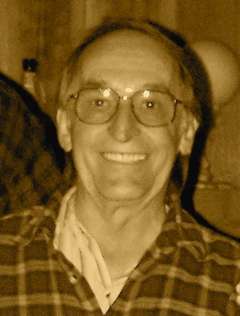 Keith was born on Dec. 27, 1934, in Santa Barbara. “My parents separated when I was three years old,” he told me last week. “It was the Depression; times were hard. The county took over the kids. I went through one orphanage and three foster homes before I settled on one. I kept all my stuff in a cardboard box under my bed when I was a kid so I could pick up and go anytime.
“The last home lasted from when I was 10 to when I was 17. That one worked out real well for me.” His foster parents’ lived on a farm that “backed up to Los Padres National Forest…
“During the Second World War, we had to support ourselves because everything was rationed.” Farm families in the area traded butter, produce, meat, and poultry with each other, Keith said. “Looking back on it we did real good during the war.
“I went in the Air Force in February 1954 because I heard that the draft board was coming for me.” Had he been drafted, Keith would have ended up in the Army, but “I’d been on a farm, and I didn’t want to be slogging through mud.
“In 1954 when I joined, the Korean war was ongoing, but it had slowed down. We still don’t have a truce there, by the way. When I enlisted, they kept giving me a bunch of tests, and I finally got accepted into pilot training. Three months after I joined, I soloed my first airplane, a Piper two-seater.” During pilot training, Keith said, “I flew 40 different airplanes. I checked out [as an approved pilot] in every airplane I flew.”
In 1955, Keith married, and with his wife Patsy soon had a son and daughter. The family was living in Bangor, Maine, where Keith was stationed when he was sent to Nellis Air Force Base on the outskirts of Las Vegas for a three-week training course.
Part of Keith’s training was in an F-100C, “the first production plane that would do supersonic in level flight.” The single-engine fighter jet carried four 50-caliber machine guns on its wings. One day, “I was up in the air for an hour,” he recalled. “It was a gunnery run, and when you run out of bullets, you come back for more.” Doing just that, Keith was landing on a runway at Nellis when everything went to hell.
“I touched down and rode probably 100 yards when [the right landing gear] broke off. I was still doing 200 mph, and I started cartwheeling to the right, wing tip to wing tip. It was a very exciting ride.”
The plane cartwheeled onto a grassy median strip between runways, said Keith, “and it’s a good thing. If I was doing that on the concrete, there’d be nothing but sparks. That was my biggest fear when it started. I thought, “Oh, shit! I’m burned up!”
As the jet cartwheeled down the median, “my head’s banging on the canopy on both sides,” Keith remembered. “I’m wearing a helmet that weighs six to eight pounds….
“I had no control over anything. When the airplane finally stopped, the firetrucks were right there. I blew the canopy off and started to run. I got about 50 feet and collapsed.”
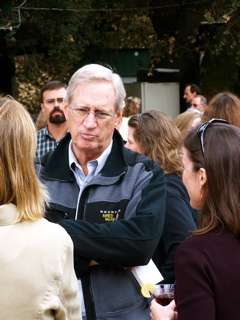
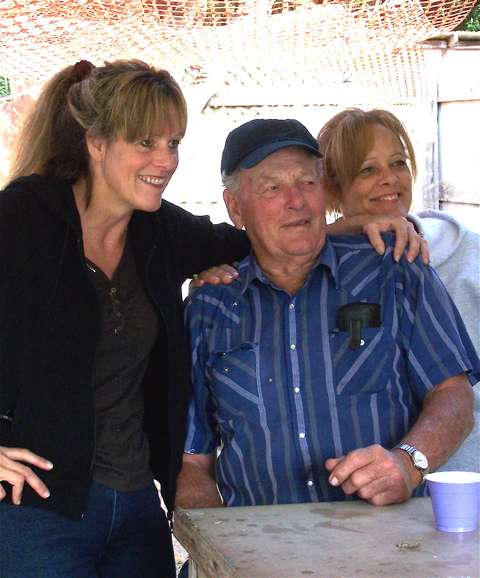
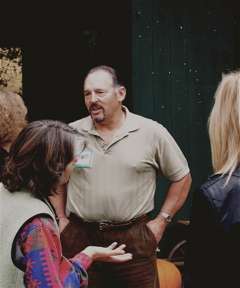
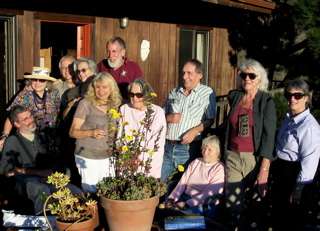 Keith (seen here at center with a few of the guests at his party) recalled, “I felt a lot of pain. Half my body was paralyzed.” His neck was broken, and there was bleeding into his spinal column. Keith spent the next five months in a hospital at Parks Air Force Base where the patient in the next room was World War II hero “Jimmy Doolittle of Thirty Seconds Over Tokyo fame.” Doolittle, who had “something wrong with his knee,” proved to be a friendly neighbor, Keith said. Doctors initially warned Keith he might have only five years to live. Keith’s injuries had caused him to have a stroke, and “they figured I’d have later strokes.” Both predictions proved wrong although Keith was left with mild tremors.
Keith stayed in the Air Force after he was well enough to return to duty but was taken off the flying staff. “They said it would be dangerous for my life,” he noted.
Instead he was made a logistics officer and sent to Greenland for a year. This was followed by a short stint at Castle Air Force Base in Merced and then Tokyo, where he was living when he took the trip to the Philippines.
As the logistics staff officer for the 5th Air Command (the regional air command for the Far East), Keith was sent to Vietnam four times as the war there intensified. At other times, he was dispatched to Korea, Okinawa, Guam, Taiwan, and Thailand, as well as the Philippines. A logistics officer makes sure military supplies are where they should be, and the record keeping required ultimately made Keith computer savvy.
.
After leaving the Air Force in 1968, Keith worked as a bartender in Monterey and somehow managed to convince the National Institute of Mental Health to contract with him to teach drug-abuse treatment at Hayward State, a subject he then had to quickly master.
That position led to his writing a drug-abuse-treatment plan for Stanislaus County and then four years as executive director of Walden House treatment program in San Francisco. For the next 11 years, he consulted with all of California’s alcohol- and drug-abuse programs through a State Mental Health Department project.
Keith arrived in West Marin soon after the storm and flood of 1982, left in 1998 for two years, and has been back here ever since fixing people’s Macintosh problems. How did he come to advertise as the Mac Guru? “Somebody called me that about 1998,” Keith replied. “I thought, ‘I’ll stick it in the paper and see if it draws any flies.’ It worked.”
But now, Keith said, “it’s time to retire…. I’ll still do the same thing, but I won’t work as hard.” The computer guru told me his customer base totals 401 Mac users, noting that a few out-of-state customers, such as former West Marin resident John Grissim in Sequim, Washington, consult with him by phone and email. Keith added that he now plans to do more long-distance consulting.
Why is he leaving? Keith, who has children in Georgia, said a series of health problems last winter made him think, “I ought to find someplace cheaper to live with family around if something happens. I can’t afford to get sick in West Marin.”
But as a sign at his goodbye party said, “We’ll miss you, Keith.”

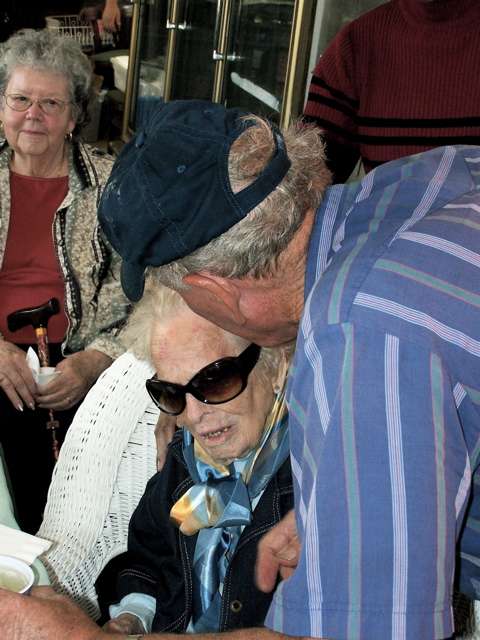
 Point Reyes Station resident Hazel Martinelli, matriarch of the Martinelli ranching family, died Saturday, Oct. 27, at 101 years old. She was the mother of Leroy, Patricia, and Stanley Martinelli of Point Reyes Station and the widow of Elmer W. Martinelli.
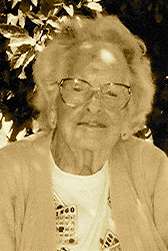 A Vigil Service for Mrs. Martinelli will be held at 6 p.m. Thursday, Nov. 1, at Sacred Heart Church in Olema. The Funeral Mass will be held at 10 a.m. Friday at the church followed by entombment in Olema Cemetery. Visitation will be from 11 a.m. to 4 p.m. Thursday at Parent-Sorensen Mortuary in Petaluma.


 A Lesser goldfinch eating buds on my rosemary bush. Lesser goldfinches eat seeds, flower buds, and berries. Point Reyes Station ornithologist Rich Stallcup, who identified the finch in the photo, this week told me, “Lesser goldfinches… are way less common than American goldfinches in West Marin during summer. There is an upward pulse in their numbers in the fall. Then both species withdraw a bit inland for the winter.”
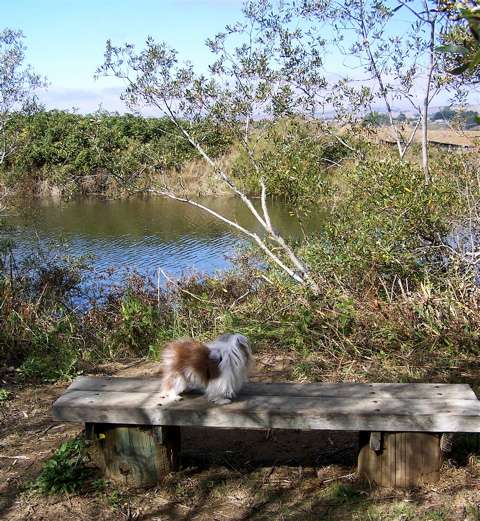
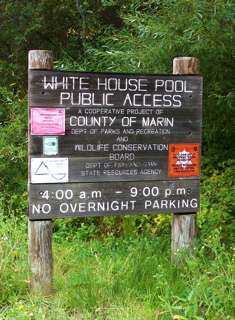 A tip of the hat this week to Rod Ruiz, supervising ranger for Marin County parks. When alerted 10 days ago to a paradox at White House Pool (no scenery visible from some scenic overlooks along Papermill Creek), he promptly fixed the problem.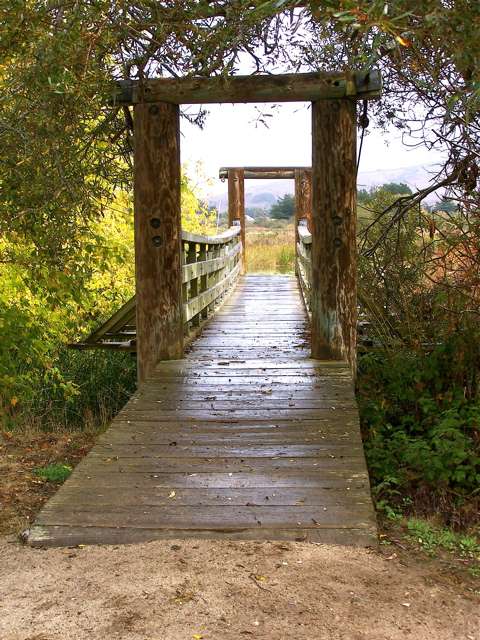




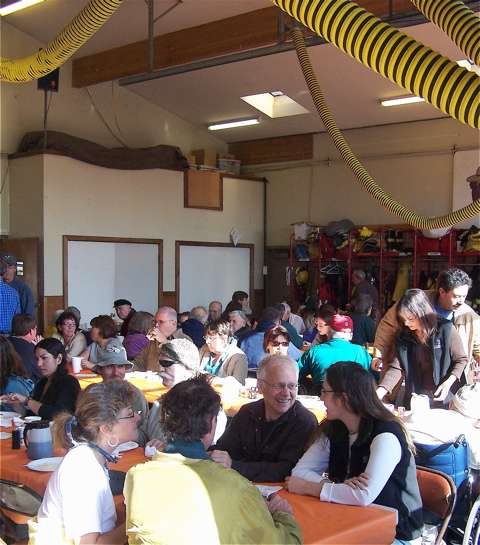
 Marin County Supervisor Judy Arnold, who represents the Novato area, attended, as did Supervisor Charles McGlashan, who represents Southern Marin. Supervisor Steve Kinsey, who represents West Marin where the bulk of the county’s agricultural is located, did not attend but was represented by aide Liza Crosse. Many Farm Bureau members are unhappy with Supervisor’s Kinsey’s support for parts of a new Countywide Plan that would make provisions for establishing public trails on ranchland and would limit housing for ranch families to 7,000 square feet.
 .
.